


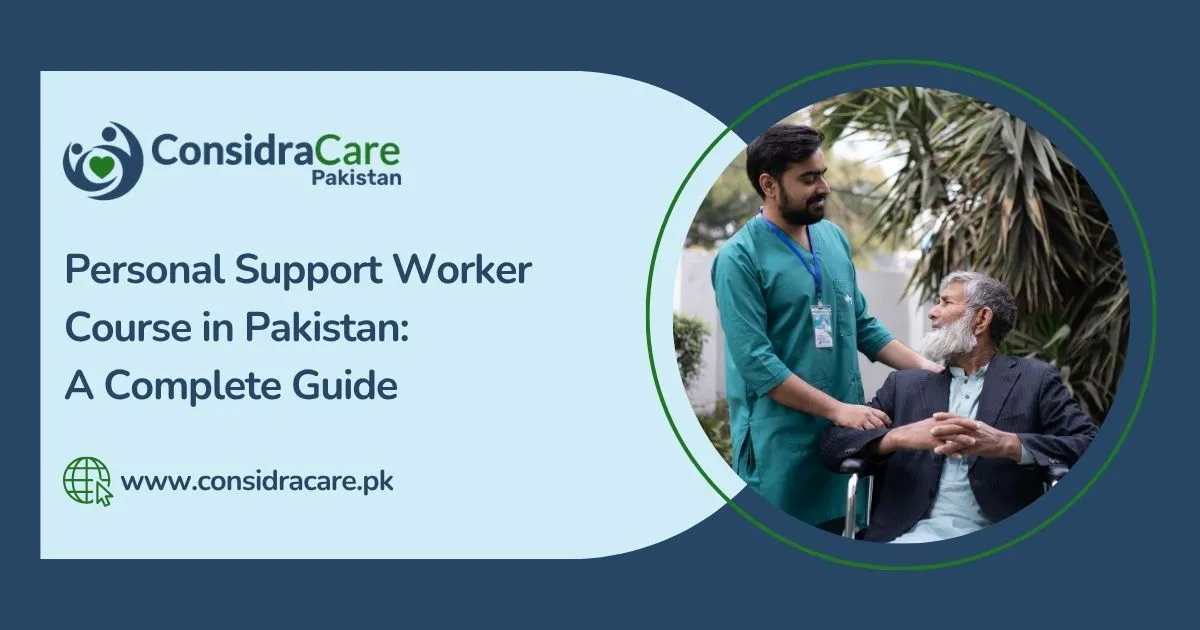
The demand for trained caregivers is steadily rising in Pakistan and abroad. This is where a Personal Support Worker (PSW) course becomes relevant. A PSW is someone trained to assist individuals who need help with daily living, such as elderly people, patients recovering from illness, or individuals with disabilities.
If you’re considering a career in healthcare but don’t want to spend years in formal education, a PSW course offers a practical and relatively quick pathway into the field.
What is a Personal Support Worker (PSW)?
A Personal Support Worker provides non-medical care and basic health support. Their role focuses on improving the quality of life for patients by helping with everyday tasks and ensuring comfort and safety.
Typical responsibilities include:
- Assisting with personal hygiene (bathing, grooming, toileting, etc)
- Helping with mobility and transfers
- Monitoring basic health conditions
- Supporting meal preparation and feeding
- Providing companionship and emotional support
PSW/Caregiver Course in Pakistan: Overview
In Pakistan, PSW and caregiver courses are offered as short vocational programs. These courses are designed to balance theory with hands-on training.
Key highlights:
- Duration: 2 to 6 months
- Training style: Around 70–80% practical work and the rest theory
- Focus: Real-world caregiving skills
- Locations: Lahore, Islamabad, Rawalpindi, Peshawar
These programs are especially suitable for students who want job-ready skills in healthcare in a short time.
Major PSW Course Providers in Pakistan:
Several institutions across Pakistan offer caregiver and PSW training. Here are some of the most recognized ones:
1. National Vocational & Technical Training Commission (NAVTTC)
- Offers structured 6-month Care Worker courses
- Focuses on patient safety, hygiene, and mobility
- Government-supported training programs
View Course Contents & Lesson Plan
2. Holistic Care Academy
- Specialized training for the elderly and patient care
- Targets individuals aged 20–40
- Emphasis on practical caregiving techniques
3. University of Lahore
- Provides professional-level PSW training
- Suitable for those seeking structured academic environments
4. Institute of International Technology, Pakistan
- Offers internationally recognized diplomas
- Includes Qualifi Level 2 and Level 3 certifications
5. Generation Institute of Health Management Sciences
- 6-month Health Care Giver Certificate
- Combines theory with clinical exposure
6. Pakistan Red Crescent Society
- Provides first aid and basic care training
- Useful as an additional certification for PSWs
Course Curriculum: What You Will Learn?
PSW courses in Pakistan are designed to cover essential caregiving skills. The curriculum typically includes:
- Infection prevention and control
- Personal hygiene and patient care
- Mobility assistance and patient handling
- Basic medication support
- Nutrition and meal planning
- Communication and patient interaction
Most programs include clinical or practical training in hospitals or care settings, which helps build confidence before entering the workforce.
Eligibility Criteria:
The entry caregiver course requirements are generally flexible:
- Education: Matric or Intermediate
- Age limit: Usually between 16 and 35 (some institutes accept up to 40)
- Skills: Basic communication and willingness to work in caregiving roles
No prior medical background is required.
Certification Levels Explained:
PSW courses in Pakistan may offer different certification levels depending on the institute:
Level 2 Certificate
- Entry-level qualification
- Covers basic caregiving and support skills
- Suitable for beginners
Level 3 Diploma
- More advanced training
- Prepares students for supervisory or senior caregiver roles
- Often internationally recognized
Career Opportunities After a PSW Course:
After completing a PSW course, graduates can explore several job options:
- Home caregiver
- Hospital support staff
- Nursing home assistant
- Rehabilitation centers
- Overseas caregiving jobs (especially in the Middle East, UK, and Canada)
Many students choose this path as a stepping stone into international healthcare careers.
Why Choose a PSW Course in Pakistan?
A PSW course is a practical option if you are looking for:
- Short-duration training
- Affordable education
- Quick entry into the job market
- Opportunities abroad
It also suits individuals who prefer hands-on work over theoretical study.

