
When an elderly parent takes several medicines, even a careful family can lose track of a changed dose, an old prescription, or whether today’s tablet was already taken. The safest response is not simply to buy a pillbox. It is to create one reliable system that keeps the medicine list, original labels, daily record, refills, and caregiver handovers in agreement.
This guide explains how to organise medicines for elderly parents at home. It does not replace instructions from a doctor or pharmacist, and it should never be used to start, stop, split, crush, or change the timing of a medicine.
Why Medicine Organisation Becomes More Important With Age?
Older adults often receive treatment for more than one health condition, sometimes from different doctors. Prescription medicines may also be used alongside pain relievers, allergy tablets, vitamins, herbal products, eye drops, inhalers, or creams bought without a prescription.
Age-related changes can affect how the body handles medicines and can increase the chance of side effects or interactions. Poor eyesight, reduced hand strength, memory changes, and similar-looking packaging can add another layer of risk. The US National Institute on Aging therefore recommends keeping a complete, current list and sharing it with healthcare professionals.
A good home system should answer five questions at any time:
- What medicines is your parent currently taking?
- What is each medicine for and how was it prescribed?
- Has the current dose already been taken?
- What has recently started, stopped, or changed?
- Who should be contacted if anything is unclear?
Step 1: Gather Every Medicine for an Initial Audit
Begin when you have enough time to work without interruptions. Ask your parent to be involved wherever possible, and collect medicines from cupboards, handbags, bedside tables, the refrigerator, and any other place where they are normally kept.
Include:
- prescription tablets, capsules, liquids, and injections;
- medicines used only when needed;
- inhalers, eye or ear drops, creams, and ointments;
- over-the-counter pain, cough, allergy, sleep, or stomach products;
- vitamins, minerals, herbal remedies, and nutritional supplements; and
- recently prescribed medicines that have not yet been started.
Do not assume that a familiar product is harmless or unrelated. Non-prescription and herbal products can interact with prescribed treatment, so they belong on the same list.
Separate Current, Discontinued, Expired, and Uncertain Medicines
Create four clearly separated groups. Keep current medicines in the active supply. Secure discontinued, expired, duplicate, or unidentified products away from the active medicines until a pharmacist advises how to dispose of them safely.
If two containers appear to contain the same medicine under different brand names, do not combine or discard them based on appearance. Ask a pharmacist to confirm the active ingredient, strength, and current prescription first.
Step 2: Create One Master Medication List
The master list should be the family’s single source of truth. It must reflect what your parent is actually taking, not simply every prescription issued in the past.
Record the following details exactly as they appear on the label or current written instructions:
| Information | What to record |
|---|---|
| Medicine | Brand name and generic name, when shown |
| Strength and form | For example, the printed tablet, liquid, inhaler, or cream strength |
| Directions | Current dose, route, timing, and any food instructions |
| Purpose | Why it was prescribed, if known |
| Prescriber | Doctor, clinic, or hospital department |
| Special storage | Refrigeration, protection from light, or other label instructions |
| Start or change date | When the current instructions began |
| Allergies or reactions | Known medicine allergies and previous adverse reactions |
Keep one copy in an easy-to-find but private place at home. A responsible family member can keep another copy on a phone for appointments or emergencies. If several relatives or caregivers help, decide who is authorised to update the master version so that competing copies do not develop.
Update the list on the same day that a medicine is started, stopped, or changed by an authorised prescriber. Write the date and the name of the clinician or service that issued the instruction.
Step 3: Choose a Safe Storage Location
Unless its label says otherwise, medicine generally needs a cool, dry place away from direct sunlight and household heat. A steamy bathroom, a shelf beside the cooker, or the top of a refrigerator is usually unsuitable.
Keep each medicine in its original labelled packaging until it is needed or has been placed in a pharmacist-approved organiser. Original packaging helps the family confirm the patient’s name, medicine, strength, expiry date, and special instructions.
Use a secure cupboard, drawer, or storage box that:
- is inaccessible to children, visitors, and pets;
- can be locked when memory problems or unsafe access are concerns;
- is well lit when opened;
- keeps each household member’s medicines separate; and
- separates oral medicines from creams, ointments, and other external-use products.
Medicines that require refrigeration should follow the temperature and handling instructions on the label. Keep them in a consistent, protected location inside the refrigerator rather than in an unlabelled food container. If electricity interruptions could affect storage, ask the dispensing pharmacist how long that specific product can safely remain outside its stated range and what backup arrangement is appropriate.
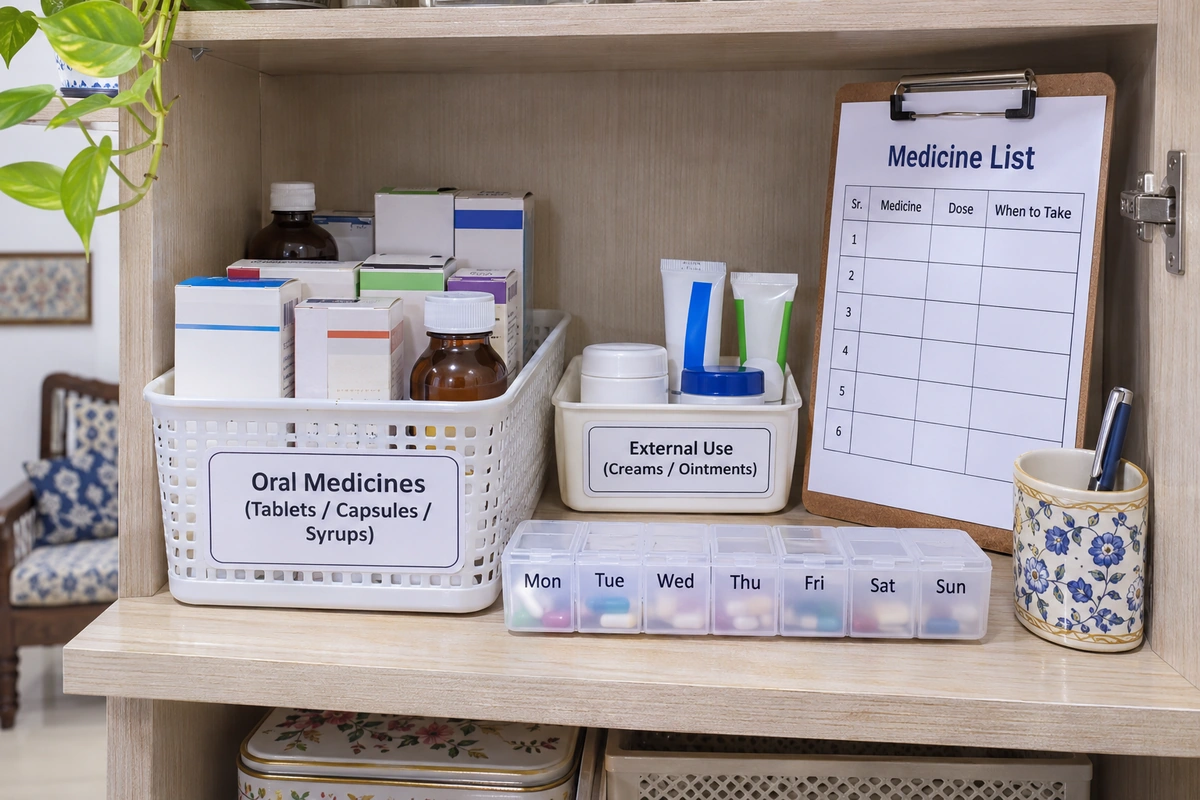
Adapt the System for Memory, Vision, or Hand Difficulties
Ask the pharmacy whether it can provide larger-print labels or easier-to-open packaging when appropriate. Easy-open containers still need secure storage if children or a person with memory impairment can reach them.
Do not rely on tablet colour alone. Appearance can vary between manufacturers, and two different medicines may look similar. Good lighting, readable labels, and the master list are safer identifiers.
Step 4: Check Whether a Pill Organiser Is Appropriate
A weekly organiser can make scheduled doses easier to see, but not every medicine is suitable for removal from its original packaging. Moisture, light, temperature, or the product’s formulation may affect how it should be stored.
Before transferring medicines, ask a pharmacist to confirm which products can go into the organiser. Current guidance from the NHS Specialist Pharmacy Service recommends original packaging as the default and professional assessment when a multi-compartment organiser is being considered.
An organiser also needs enough compartments for the actual schedule. A single daily compartment is not safe when morning, afternoon, evening, or bedtime medicines must remain separate.
Keep the original boxes or bottles for identification and refill information. Medicines used only when needed, refrigerated products, liquids, drops, inhalers, and other items that do not belong in the organiser should remain clearly listed in the daily plan.
Let One Responsible Person Prepare the Weekly Organiser
Choose one trained family member or appropriate professional to prepare it at a consistent time each week. They should work in a quiet, well-lit place and check every medicine against the current master list and label.
Do not top up an organiser while old tablets remain inside. Resolve any unidentified tablet or difference between the list and label before completing the setup. A second careful check can be helpful when the regimen is complex, but both people should use the same approved instructions.
Step 5: Record Each Dose Instead of Relying on Memory
A pillbox shows what appears to remain; it does not always prove who took or gave a dose. Use a paper chart or a controlled digital record alongside it.
The record can show:
- scheduled date and time;
- whether the medicine was taken, refused, unavailable, or uncertain;
- the initials of the person who assisted; and
- a brief note about any problem that needs follow-up.
Never record a dose before it has been taken. If your parent manages medicines independently, agree on a simple method they can use comfortably, such as ticking a large-print chart immediately after each scheduled dose.

Prevent Double Doses During Caregiver Handovers
The incoming family member or caregiver should check the written record and organiser, not rely only on a verbal “I think it was given.” Any refused, missed, spilled, or uncertain dose should be documented and escalated according to the medicine’s professional instructions.
For families coordinating care from another city or country, a shared read-only copy of the current list and a controlled dose log can improve visibility. The article on coordinating elder care while living abroad offers broader guidance on local support and family communication.
Step 6: Track Refills, Expiry Dates, and Prescription Changes
Running out of an important medicine can disrupt treatment, while stockpiling makes old and current supplies easier to confuse. Add a refill date or remaining-supply check to the weekly routine and request renewals with enough time for the prescription and pharmacy process.
Once a month, check expiry dates and packaging condition. Do not use tablets that are loose and unidentified, liquids with unclear opening dates, or products stored outside their required conditions without professional advice.
Maintain a short change log with:
- the date of the change;
- the medicine and old instruction;
- the new instruction;
- who authorised it; and
- who updated the master list, organiser, and caregiver record.
Reconcile Medicines After a Hospital or Doctor Visit
Hospital discharge is a common point of confusion because a new list may replace, pause, or modify earlier prescriptions. Compare the discharge instructions with the medicines physically present at home.
If the documents conflict, do not guess which version is correct. Contact the discharging team, treating doctor, or pharmacist. Update the master list, active storage, organiser, refill plan, and caregiver handover only after the instructions are clear.
Step 7: Review the Whole Routine With a Pharmacist or Doctor
Medicine organisation cannot identify every interaction or determine whether treatment is still appropriate. Arrange a professional review when:
- several doctors or pharmacies are involved;
- a medicine has recently been added or changed;
- your parent has new dizziness, drowsiness, confusion, falls, poor appetite, or another concerning change;
- swallowing or handling the medicine has become difficult;
- the schedule is too complicated to follow reliably; or
- the family cannot explain why a medicine is being used.
Bring the master list and, when practical, all original containers. Ask what each medicine is for, which side effects need attention, how missed doses should be handled, whether any tablets may be split or crushed, and when the next review is due.
What to Do If a Dose Is Missed, Doubled, or Uncertain
The correct response depends on the specific medicine, strength, timing, and the person’s health. Do not automatically give a replacement dose or double the next dose.
Use this safety sequence:
- Stop and check the label, master list, organiser, and dose record.
- Note the medicine name, strength, possible amount, and approximate time involved.
- Contact the dispensing pharmacist, prescriber, or appropriate urgent medical service for medicine-specific advice.
- Keep the packaging available so the professional can identify the product accurately.
Seek emergency help immediately if a suspected medicine error is followed by difficulty breathing, collapse, a seizure, severe swelling or allergic symptoms, inability to wake normally, or sudden severe confusion. Do not induce vomiting unless a qualified professional specifically instructs you to do so.
When Reminders Are No Longer Enough
Phone alarms and charts are useful only while your parent can understand and follow them safely. More direct supervision may be needed if doses are repeatedly missed or duplicated, labels can no longer be read, memory is worsening, medicines are accessed unsafely, or several helpers cannot maintain a reliable record.
A general caretaker may provide reminders for medicines already organised by the family or healthcare team, but families should not assume that every helper is qualified to administer injections, alter doses, or perform other clinical tasks. ConsidraCare’s guide to what a home caretaker can safely help with explains this distinction.
For routine day-to-day assistance, families can review ConsidraCare’s verified Senior Health Companion service. When the care plan requires more complex medication management or clinical support, discuss the need with the treating clinician and an appropriately qualified provider. ConsidraCare lists medication management within its home nursing services.
Weekly and Monthly Medicine Safety Checklist
Every Week
- Check that the master list matches the latest written instructions.
- Prepare the organiser only for medicines a pharmacist has confirmed are suitable.
- Review remaining supply and refill dates.
- Confirm that every caregiver can access the current schedule and dose record.
- Check refrigerated and specially stored products.
Every Month or After Any Prescription Change
- Check expiry dates and packaging condition.
- Remove discontinued medicines from active storage.
- Update every approved copy of the master list.
- Record who authorised the change.
- Confirm upcoming reviews and prescription renewals.
- Reassess whether your parent can still use the system safely.
Final Thoughts
The safest medicine system combines one accurate list, original labels, secure storage, pharmacist-approved organisation tools, a written dose record, and clear caregiver handovers. It should make the prescribed plan easier to follow without allowing anyone to improvise treatment.
If any medicine, instruction, or dose is uncertain, pause and ask a pharmacist or doctor. A few minutes spent checking is safer than relying on memory or appearance.