Sweet potatoes, known as shakarkandi in Pakistan, are naturally sweet, starchy root vegetables that provide fibre, beta-carotene, vitamin C, potassium and other nutrients. They can be a nourishing carbohydrate choice, but their effect on health depends on the portion, cooking method and foods served alongside them.
This guide explains the nutrition and health benefits of sweet potatoes, how they may fit into a diabetes-friendly diet, and when extra care is needed.
What Are Sweet Potatoes?
Sweet potato, or Ipomoea batatas, is an edible root from the morning glory plant family. It is botanically different from the common white potato, which is a tuber from the nightshade family.
Sweet potatoes are also different from true yams. Although the names are sometimes used interchangeably, yams are a separate group of tubers with rougher, bark-like skin and a drier texture.
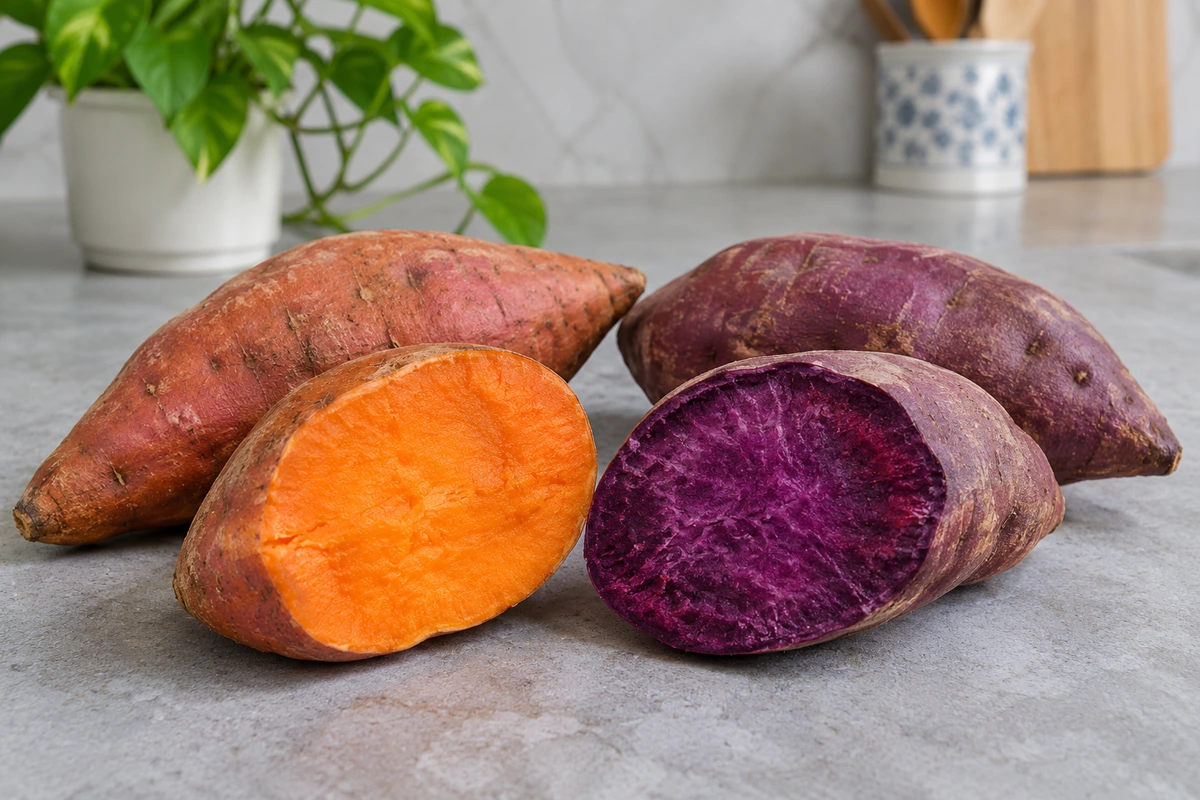
Sweet potatoes may have orange, cream, yellow or purple flesh. Orange varieties are especially rich in beta-carotene, while purple varieties contain anthocyanins. These natural plant pigments give the vegetables their colour and contribute antioxidant compounds.
Sweet Potato Nutrition Facts
The following figures are rounded values for one medium sweet potato, about 114 grams of cooked flesh, baked in its skin without added salt. Values can change with the variety, portion and cooking method.
| Nutrient | Approximate amount |
|---|---|
| Calories | 103 kcal |
| Carbohydrate | 23.6 g |
| Fibre | 3.8 g |
| Protein | 2.3 g |
| Fat | 0.2 g |
| Vitamin A | 1,096 mcg RAE |
| Vitamin C | 23 mg |
| Potassium | 542 mg |
| Vitamin B6 | 0.33 mg |
| Manganese | 0.57 mg |
Sweet potatoes are mainly a source of carbohydrate. They contain little fat unless oil, butter, cream or another fat is added during preparation. Orange-fleshed varieties can provide a substantial amount of vitamin A activity because the body converts some of their beta-carotene into vitamin A.
Evidence-Based Health Benefits of Sweet Potatoes
1. Provide Beta-Carotene for Normal Vision
Beta-carotene is the orange plant pigment found in many sweet potatoes. The body can convert it into vitamin A, which is needed for the retina to respond to light and for the surface of the eye to function normally.
Eating beta-carotene-rich foods can help people meet their vitamin A needs. This does not mean sweet potatoes can correct every vision problem or replace assessment and treatment for an eye condition.
2. Support Normal Immune Function
Vitamin A helps maintain the tissues that line the respiratory and digestive tracts and supports the normal development and activity of immune cells. Sweet potatoes also contribute vitamin C, which has several roles in immune function and tissue repair.
These nutrients make sweet potatoes a useful part of a varied diet, but no single food can prevent infections or “boost” immunity on its own.
3. Contribute Fibre for Digestion and Regularity
One medium baked sweet potato provides close to four grams of fibre. Fibre adds bulk to stool, supports bowel regularity and can help a meal feel more satisfying.
Digestive health depends on the overall diet, fluid intake and activity level. Sweet potatoes can be combined with other fibre-rich foods such as chia seeds, vegetables, pulses, fruits and whole grains.
If you are increasing fibre after eating very little, do it gradually and drink adequate fluids. A sudden large increase may cause gas, bloating or abdominal discomfort.
4. Fit Into a Heart-Healthy Eating Pattern
Plain sweet potatoes are naturally low in saturated fat and provide potassium and fibre. Potassium is involved in fluid balance, muscle function and normal blood-pressure regulation, while fibre-rich dietary patterns are associated with cardiovascular health.
The benefit depends on the wider meal. Deep-frying or adding large amounts of salt, butter or sugary toppings changes its nutritional profile. Readers managing hypertension can explore other foods that fit a blood-pressure-conscious diet.
5. May Help a Meal Feel More Filling
The combination of fibre, water and carbohydrate can make sweet potatoes satisfying, particularly when they are eaten with a source of protein and non-starchy vegetables. This may make it easier to build a balanced meal and manage hunger.
Sweet potatoes do not burn body fat. Whether they support weight management depends on portion size, cooking method, toppings and total energy intake. A plain boiled or baked serving is very different from deep-fried chips or a sweetened dessert.
6. Supply Antioxidant Plant Compounds
Orange sweet potatoes contain carotenoids, while purple varieties contain anthocyanins. These compounds can help the body manage oxidative processes that occur during normal metabolism.
Laboratory and animal studies have investigated whether sweet potato pigments have broader effects on inflammation, cancer cells or brain function. Those findings should not be treated as proof that eating sweet potatoes prevents or treats these conditions in people.
Can People With Diabetes Eat Sweet Potatoes?
Many people with diabetes can include sweet potatoes in an appropriate portion. However, they are still a starchy carbohydrate and can raise blood glucose. Calling them “healthy” does not make the carbohydrate unlimited or remove the need for glucose monitoring and an individual meal plan.
Several factors affect the glucose response:
- Portion: A larger serving provides more carbohydrate.
- Cooking: Boiled sweet potato often has a lower glycaemic response than a very soft baked or roasted portion, although results vary by variety and cooking time.
- Meal composition: Protein, non-starchy vegetables and a modest amount of healthy fat can make the meal more balanced and may slow digestion.
- Individual response: Medicines, activity, glucose control and the rest of the meal all matter.
A practical plate could include one-quarter sweet potato, one-quarter fish, chicken, eggs or pulses, and one-half non-starchy vegetables. Someone following a clinician-prescribed carbohydrate target should use that target rather than a generic serving rule.
Sweet potatoes and sweet potato extracts should not be presented as diabetes remedies. A Cochrane review found insufficient evidence to recommend sweet potato preparations as a treatment for type 2 diabetes. For broader meal planning, see these diabetes-friendly eating patterns.
Sweet Potato vs White Potato: Is One Healthier?
Both can be part of a nutritious diet. Their nutrient profiles differ, but preparation and portion frequently matter more than choosing a universal winner.
| Feature | Sweet potato | White potato |
|---|---|---|
| Vitamin A | Orange varieties are rich in beta-carotene | Usually contains very little vitamin A |
| Potassium and vitamin C | Provides both | Also provides both; amounts vary by type and preparation |
| Fibre | Provides fibre, especially when more of the edible outer portion is retained | Also provides fibre, particularly with the skin |
| Carbohydrate | A starchy carbohydrate | A starchy carbohydrate |
| Plant pigments | Orange and purple varieties supply carotenoids or anthocyanins | Coloured potato varieties contain their own plant pigments |
A boiled or baked version of either vegetable is generally a better everyday choice than chips or fries. Choose the one you enjoy, keep the portion appropriate, and build the rest of the plate with protein and vegetables.
Healthiest Ways to Prepare and Eat Sweet Potatoes
Sweet potatoes can be boiled, steamed, baked or roasted. Each method changes their texture and may alter nutrient retention and glucose response, but all can fit a balanced diet.
- Boil or steam: These methods require no added fat and are useful when a softer texture is needed.
- Bake or roast: Use a modest amount of oil and avoid cooking until heavily charred.
- Keep the preparation savoury: Lemon, black pepper, cumin, coriander and chilli can add flavour without sugary sauces.
- Add a little healthy fat: A small amount of olive or canola oil, nuts, seeds or yoghurt can help the body absorb carotenoids.
- Pair it well: Add eggs, fish, chicken, beans, lentils or yoghurt and plenty of non-starchy vegetables.
In Pakistan, boiled shakarkandi can be served as a lightly seasoned chaat with lemon and spices. It also works in soup, a savoury mash, or a vegetable and pulse bowl. Regularly coating it with sugar syrup or deep-frying it turns a simple root vegetable into a meal or snack with more added sugar or fat.

Possible Side Effects and Who Should Be Careful
Sweet potatoes are safe for most people when eaten as food, but a few situations require extra attention.
- Digestive discomfort: A large serving may cause gas or bloating in someone who is not used to fibre.
- Diabetes: Count sweet potato as a carbohydrate food and use the portion recommended in your meal plan.
- Calcium oxalate kidney stones: Sweet potatoes contain oxalate. People who form this type of stone may be advised to limit some high-oxalate foods or pair them appropriately with calcium-containing foods. The right plan depends on stone type and urine-test results.
- Chronic kidney disease: Sweet potatoes provide potassium. People prescribed a potassium restriction should ask their clinician or renal dietitian how much, if any, fits their plan.
- Allergy: Allergy is uncommon, but stop eating the food and seek medical advice if it causes hives, swelling, vomiting or breathing difficulty.
Food-derived beta-carotene is not the same as taking excessive doses of preformed vitamin A supplements. Eating orange vegetables may harmlessly tint the skin yellow-orange if intake is extremely high over time, but this is different from vitamin A toxicity.
How Much Sweet Potato Should You Eat?
There is no single serving that is right for everyone. A simple starting point is to treat sweet potato as the starch portion of the meal rather than as an unlimited vegetable. For many balanced plates, the starch occupies roughly one-quarter of the plate.
Your appropriate amount may be different if you have diabetes, chronic kidney disease, a weight-management target, high energy needs, or a prescribed therapeutic diet. Use advice from your doctor or registered dietitian when your portion has been individualised.
Conclusion
Sweet potatoes are nutritious, versatile carbohydrate foods. They provide fibre, beta-carotene, vitamin C, potassium and colourful plant compounds, and they can support a balanced diet when prepared simply.
The healthiest approach is to choose an appropriate portion, pair it with protein and vegetables, and limit deep-frying or heavy sugary toppings. People managing diabetes, kidney disease or calcium oxalate stones should fit sweet potatoes into their individual nutrition plan rather than relying on general health claims.