


Methi dana, also known as fenugreek seeds, is one of those traditional ingredients that has stayed relevant for generations for a reason. Found in South Asian kitchens, home remedies, and herbal routines, these small golden-brown seeds are valued for more than just flavor. They are rich in fiber, minerals, and plant compounds that may support blood sugar balance, digestion, appetite control, and general wellness.
At the same time, not every claimed benefit of methi dana is equally well supported. Some uses have better evidence than others, and the best results usually come from using it consistently, in moderation, and as part of an overall healthy routine.
This guide explains what methi dana is, its main benefits, how to use it, the best time to take it, possible side effects, and who should be careful with it.
What Is Methi Dana?
Methi dana is the seed of the fenugreek plant, scientifically known as Trigonella foenum-graecum. The seeds are small, hard, and slightly bitter, with a strong aroma that becomes milder when soaked, roasted, or cooked.
It is known by different names:
- English: Fenugreek seeds
- Urdu: میتھی دانہ
Fenugreek leaves are also eaten as a vegetable, but when people talk about methi dana benefits, they usually mean the seeds.
Nutrition in Methi Dana:
Fenugreek seeds are nutrient-dense, especially for such a small food. They are valued mainly for their fiber content, along with protein and minerals.
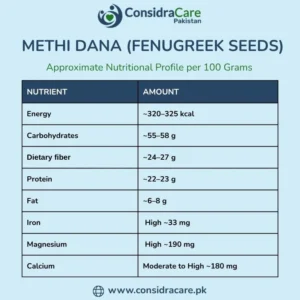
Methi dana also contains plant compounds such as:
- Galactomannan
- Saponins
- Diosgenin
- Flavonoids and polyphenols
These compounds are one reason fenugreek is often studied for metabolic and digestive health.
How Methi Dana May Work in the Body?
Many of its effects come down to two main things: fiber and bioactive plant compounds.
The soluble fiber in methi dana can form a gel-like texture in the gut. This may slow digestion, help people feel full, and reduce the speed at which carbohydrates are absorbed.
Its plant compounds, including saponins and polyphenols, may contribute to antioxidant and anti-inflammatory effects. That does not mean methi dana is a cure for disease, but it helps explain why it is often linked with support for blood sugar, cholesterol, and general wellness.
Top 10 Benefits of Methi Dana

1. May Help Support Healthy Blood Sugar Levels:
This is one of the best-known and most practical uses of methi dana. Its fiber content may slow carbohydrate absorption, which can help reduce sharp rises in blood sugar after meals.
Some people with insulin resistance or type 2 diabetes use fenugreek as a food-based support alongside medical care. It should not replace medicines or a doctor’s advice, but it may be a useful addition to a balanced eating pattern.
Best form: soaked seeds, powder, or fenugreek added to meals
Best timing: before or with meals
2. Supports Digestion:
Methi dana is widely used for digestive comfort. Because it contains a good amount of fiber, it may help support regular bowel movements and reduce feelings of heaviness after eating.
Many people drink soaked methi water or fenugreek tea in the morning because it feels soothing on the stomach. For some, it may also help with mild bloating or sluggish digestion.
Best form: soaked seeds or tea
Best timing: morning or between meals
3. May Help With Appetite Control and Weight Management:
Methi dana is not a magic weight-loss remedy, but it may support weight management in a realistic way. The fiber may increase fullness, which can make it easier to avoid overeating.
That makes it more useful as an appetite-support food than as a “fat-burning” ingredient. It works best when paired with a healthy diet, enough protein, regular movement, and good sleep.
Best form: soaked seeds or powder with food
Best timing: before breakfast or before meals
4. May Support Cholesterol and Heart Health:
Fenugreek has long been used in food traditions that emphasize heart health. Some of its fiber and saponin content may help support healthier cholesterol levels, especially LDL cholesterol, when used regularly as part of a good overall diet.
It is better to think of methi dana as a supportive food, not a treatment on its own. Heart health still depends most on overall eating habits, activity, sleep, and medical care where needed.
Best form: powder in food or soaked seeds
Best timing: daily, consistently
5. May Help Ease Menstrual Discomfort:
Many women use methi dana traditionally for menstrual discomfort. Its plant compounds and warming, soothing qualities may help some people feel more comfortable during periods.
Evidence here is not as strong as it is for blood sugar or digestion, but it remains a common traditional use.
Best form: tea or soaked seeds
Best timing: around the menstrual cycle as tolerated
6. May Support Breastfeeding in Some Women:
Fenugreek is often mentioned as a traditional galactagogue, meaning a food believed to support breast milk production. Some women report benefit, but responses vary, and the evidence is mixed.
Because breastfeeding needs can be complex, it is best to use methi dana carefully and only after discussing it with a qualified healthcare professional, especially if the baby was premature or there are feeding concerns.
Best form: tea, food use, or guided supplement use
Important note: use with caution and professional advice
7. May Support Fullness and Better Eating Control in the Morning:
A practical benefit that often gets overlooked is routine support. Many people take soaked methi dana in the morning because it helps them start the day with something light, fiber-rich, and structured.
This can be especially useful for people trying to cut down on snacking or improve meal timing.
8. May Have Mild Anti-Inflammatory and Antioxidant Effects:
Methi dana contains compounds that may help the body deal with oxidative stress. While this does not mean it can treat inflammatory diseases on its own, it is one reason fenugreek is often included in traditional wellness routines.
In plain terms, it may be a helpful small part of a broader anti-inflammatory diet that includes vegetables, fruits, legumes, whole grains, and healthy fats.
9. Traditional Use for Hair and Scalp Care:
Fenugreek is popular in homemade hair masks and rinses. People use soaked and ground methi dana on the scalp because it is believed to help with dryness, rough texture, and hair breakage.
This is a traditional beauty use, more than a strongly proven medical benefit. It may help hair feel softer or more manageable, but it should not be presented as a guaranteed hair regrowth treatment.
Best form: soaked seed paste or hair rinse
Best expectation: supportive scalp and hair care, not a miracle cure
10. Traditional Use for Skin Care:
Ground fenugreek is also used in face masks and soothing pastes. Because of its traditional reputation for calming the skin, some people use it for oily or acne-prone skin.
Again, this is a home remedy area, not a guaranteed treatment. Sensitive skin can also react badly, so patch testing matters.
Read More: Benefits of Ispaghol Husk
How to Use Methi Dana?
There are several good ways to include methi dana in your routine. The best one depends on your goal and what you can tolerate consistently.
1. Soaked Methi Dana:
This is the most common home method.
How to prepare it;
- Take 1 teaspoon of methi dana
- Soak it in a glass of water overnight
- Drink the water in the morning
- You may also chew the soaked seeds if you tolerate the taste
Best for:
- digestion
- morning routine
- appetite support
- general daily use
2. Methi Dana Powder:
Roasting and grinding the seeds can make them easier to use in food.
How to use;
- Dry roast lightly
- Grind into a fine powder
- Add 1/2 to 1 teaspoon to yogurt, vegetables, soups, or atta mixes
Best for:
- daily consistency
- mixing into meals
- people who do not like chewing soaked seeds
3. Methi Dana Tea:
A lighter option for people who prefer not to eat the seeds directly.
How to prepare;
- Boil 1 teaspoon of seeds in 2 cups of water
- Simmer for 5 to 10 minutes
- Strain and drink warm
Best for:
- digestion
- mild bloating
- people who want a gentler taste
4. In Cooking:
Fenugreek seeds can be added to:
- curries
- dals
- pickles
- spice blends
- parathas and savory breads
This is one of the safest and easiest ways to use them regularly.
5. Topical Use for Hair:
Basic hair mask:
- Soak 2 to 3 tablespoons overnight
- Grind into a paste
- Apply to scalp and hair
- Leave for 20 to 30 minutes
- Wash with a mild shampoo
Use occasionally rather than excessively, and stop if irritation happens.
Soaked Seeds vs Powder vs Tea: Which Is Best?
Soaked seeds: Best for people who want the most traditional morning method and a higher-fiber option.
Powder: Best for long-term consistency and adding to regular meals.
Tea: Best for lighter digestive use and people who dislike chewing the seeds.
Cooking Use: Best for everyday wellness and food-level consumption.
There is no single form that is perfect for everyone. The best form is the one you can use safely and regularly without digestive discomfort.
How Much Methi Dana Should You Take?
For most people, starting small is the smartest approach.
Beginner Amount: 1/2 teaspoon daily
Common Routine Amount: 1 teaspoon daily
Higher Routine Use: Up to 2 teaspoons daily in divided amounts, if tolerated
It is better to increase slowly than to start with a large amount. Too much methi dana can lead to stomach discomfort, loose stools, or excessive lowering of blood sugar in some people.
How Long Does Methi Dana Take to Show Results?
This depends on the benefit you are looking for.
- Digestion: sometimes within a few days
- Appetite/fullness: a few days to a few weeks
- Blood sugar support: often several weeks of consistent use
- Hair and scalp care: usually slower, and results vary widely
Do not expect an overnight transformation. Methi dana works, if at all, more like a supportive habit than a quick fix.
Side Effects of Methi Dana:
Methi dana is generally safe in food amounts, but it can still cause side effects, especially in larger amounts.
Possible side effects include;
- gas
- bloating
- diarrhea
- nausea
- stomach discomfort
- body odor or urine with a maple-like smell
- low blood sugar, especially in people taking diabetes medicine
- allergic reactions in sensitive individuals
These effects are more likely if you take too much too quickly.
Who Should Avoid or Use Methi Dana Carefully?
Some people should be more cautious.
1. Pregnant Women:
Large or concentrated amounts may not be appropriate during pregnancy. Food use is different from therapeutic use, so medical guidance is important.
2. People on Diabetes Medication:
Fenugreek may affect blood sugar levels. Combining it with medication without monitoring may increase the risk of low blood sugar.
3. People Taking Blood Thinners:
Because fenugreek may influence clotting or interact with medications, extra caution is sensible.
4. People with Legume Allergies:
Fenugreek belongs to the legume family, so people allergic to related foods should be careful.
5. People with Hormone-Sensitive Conditions:
Some fenugreek compounds are discussed for hormonal effects, so it is wise to ask a healthcare professional before using larger amounts regularly.
Myths vs Facts About Methi Dana:

1. Myth: Methi dana melts belly fat
Fact: It may help with fullness and better eating control, but it does not directly melt fat.
2. Myth: It cures diabetes
Fact: It may support blood sugar management, but it does not replace medicine or medical care.
3. Myth: More is better
Fact: Taking too much can cause bloating, diarrhea, and other side effects.
4. Myth: It guarantees hair regrowth
Fact: Hair masks and rinses are traditional remedies, but results vary and are not guaranteed.
5. Myth: It detoxes the body
Fact: Your liver and kidneys already handle detoxification. Methi dana may support general wellness, but “detox” claims are often exaggerated.
Final Verdict:
Methi dana is a practical, affordable, and nutrient-rich ingredient that deserves its long-standing reputation in traditional food and wellness routines. Its strongest benefits appear to be in areas like blood sugar support, digestion, fullness, and possibly cholesterol support. Other uses, such as for hair, skin, hormones, or breastfeeding, may help some people but are not equally proven.
The smartest way to use methi dana is simple: start small, stay consistent, and keep your expectations realistic. It works best as a supportive part of a healthy lifestyle, not as a miracle cure.
If you want a natural, low-cost ingredient that can fit into both cooking and wellness habits, methi dana is one of the most useful seeds to keep in your kitchen.
Frequently Asked Questions – FAQs
1. Methi Dana Benefits in Urdu:
میتھی دانہ خون میں شوگر کی سطح کو بہتر طریقے سے منظم رکھنے، ہاضمہ بہتر بنانے، بھوک کو قابو میں رکھنے، کولیسٹرول کو کم کرنے، اور عمومی صحت کو سہارا دینے میں مددگار ہو سکتا ہے۔ اس میں فائبر، پروٹین، آئرن، میگنیشیم، اور کئی مفید نباتاتی مرکبات پائے جاتے ہیں۔ تاہم، اسے دوا کا متبادل نہیں سمجھنا چاہیے، اور زیادہ مقدار میں استعمال سے گیس، پیٹ خراب ہونا، یا شوگر بہت کم ہونے کا خطرہ ہو سکتا ہے۔
2. What are the benefits of methi dana water on an empty stomach?
Drinking methi dana water on an empty stomach may support digestion, improve appetite control, and help with blood sugar balance. Fenugreek seeds contain soluble fiber, which may slow sugar absorption and increase fullness. Some people also find it helps reduce bloating and supports a better morning routine.
3. Can we eat methi dana daily?
Yes, methi dana can usually be eaten daily in small amounts. A common intake is 1/2 to 1 teaspoon per day. Daily use may support digestion and blood sugar control, but taking too much can cause bloating, diarrhea, or stomach discomfort. People who are pregnant or taking diabetes medicine should ask a doctor before using it regularly.
4. Is methi dana hot or cold for the body?
Methi dana is generally considered a warming food in traditional health systems. It is often described as “hot” for the body, which is why some people prefer it in small amounts or after soaking. In excess, it may feel too heating for some individuals.
5. What happens if you take fenugreek for 14 days?
Taking fenugreek for 14 days may lead to early benefits such as better digestion, reduced bloating, improved fullness, and steadier appetite. Some people may also notice mild support with blood sugar control. However, results for weight loss, hair growth, or hormonal changes usually take longer and vary from person to person.

