


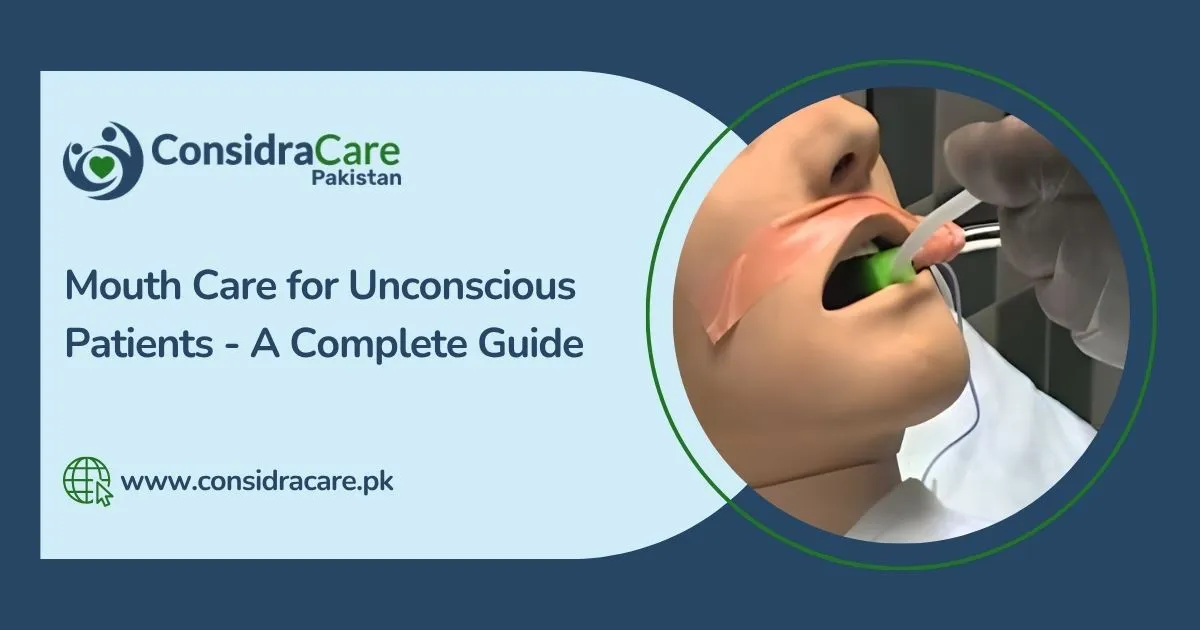
Mouth care is a fundamental aspect of nursing care for unconscious patients. It supports comfort, maintains oral hygiene, and reduces the risk of complications such as aspiration pneumonia and oral infections. Regular and careful oral care also preserves dignity and prevents dryness, cracking, and microbial overgrowth in the oral cavity.
Why Oral Care is Important?
Unconscious patients are unable to perform self-care or clear oral secretions. Without regular intervention, debris, bacteria, and secretions can accumulate, increasing the risk of infection and respiratory complications.
Consistent oral care:
- Maintains cleanliness and moisture
- Reduces bacterial load
- Prevents aspiration-related complications
- Improves overall patient comfort
Frequency of Care:
Oral care should be performed every 2–4 hours, or more frequently if required to maintain moisture and cleanliness. Regular assessment helps determine individual needs.
Patient Positioning:
Proper positioning is essential to ensure safety during oral care.
- Place the patient in a side-lying (lateral) position
- Elevate the head of the bed to 30–45 degrees
- Ensure the head is supported with pillows
This positioning allows fluids to drain from the mouth and reduces the risk of aspiration.
Equipment Required:
Common equipment includes:
- Soft foam swabs or a small, soft-bristled toothbrush
- 0.9% saline or diluted mouthwash
- Emesis basin to collect fluids
- Padded tongue depressor or mouth prop
- Disposable gloves
- Towels or tissues
Preparation:
Before starting the procedure:
- Wash your hands and wear appropriate protective equipment
- Explain the procedure to the patient, even if unconscious
- Inspect the mouth for abnormalities such as redness, ulcers, or white patches
- Remove dentures if present and clean them separately
Learn More: How to treat bedsores in elderly patients at home?
Procedure for Oral Care:
Oral care for an unconscious patient should follow a structured and gentle approach to ensure both effectiveness and safety. The procedure involves preparation, systematic cleaning of all oral surfaces, and maintaining moisture, while continuously observing the patient for any signs of discomfort or complications. Care should be delivered with attention to positioning and infection control to minimize risks such as aspiration.
Cleaning Technique:
- Use a damp (not dripping) swab or toothbrush
- Clean all oral surfaces:
- Teeth
- Gums
- Tongue
- Roof of the mouth
- Inner cheeks
- Work systematically from top to bottom
- Use a fresh swab for different areas to maintain hygiene
Gentle brushing with a small circular motion is recommended to remove debris effectively.
Moisturizing:

- Apply the prescribed oral moisturising gel if available
- Use emollients or petroleum jelly on the lips to prevent cracking
Key Safety Considerations:
While doing mouth care for unconscious patients, take care of the following:
Prevention of Aspiration:
- Never pour fluids directly into the mouth
- Ensure all swabs are moist, not saturated
- Allow fluids to drain naturally
Safe Mouth Opening:
- Use a padded tongue depressor or mouth prop
- Avoid placing fingers inside the mouth to prevent injury
Handling Reflex Responses:
- Avoid inserting tools too far back to prevent gagging
- If the patient bites down, wait for relaxation before removing the instrument
Observation and Monitoring:
During oral care, assess for:
- Redness or inflammation
- Bleeding gums
- Ulcers or lesions
- White patches suggestive of infection
- Signs of dryness or cracking
Any abnormalities should be reported to a healthcare professional promptly.
When to Seek Immediate Help?
Immediate medical attention is required if:
- There is persistent bleeding from the gums
- The patient shows signs of choking or respiratory distress
- There are extensive white patches or suspected infection
Specialized Home Care Services by ConsidraCare
ConsidraCare provides specialized home care for individuals who require ongoing clinical support at home. Our caregivers are experienced in delivering reliable care for dependent patients, helping prevent infections while promoting dignity and respect.
Contact Us Today & Book Your Free Assessment!

Conclusion:
Mouth care for unconscious patients is a critical nursing responsibility that requires attention to hygiene, positioning, and safety. Regular, gentle care reduces complications, promotes comfort, and supports overall patient well-being. Following structured procedures and maintaining vigilance during care ensures both effectiveness and patient safety.

