


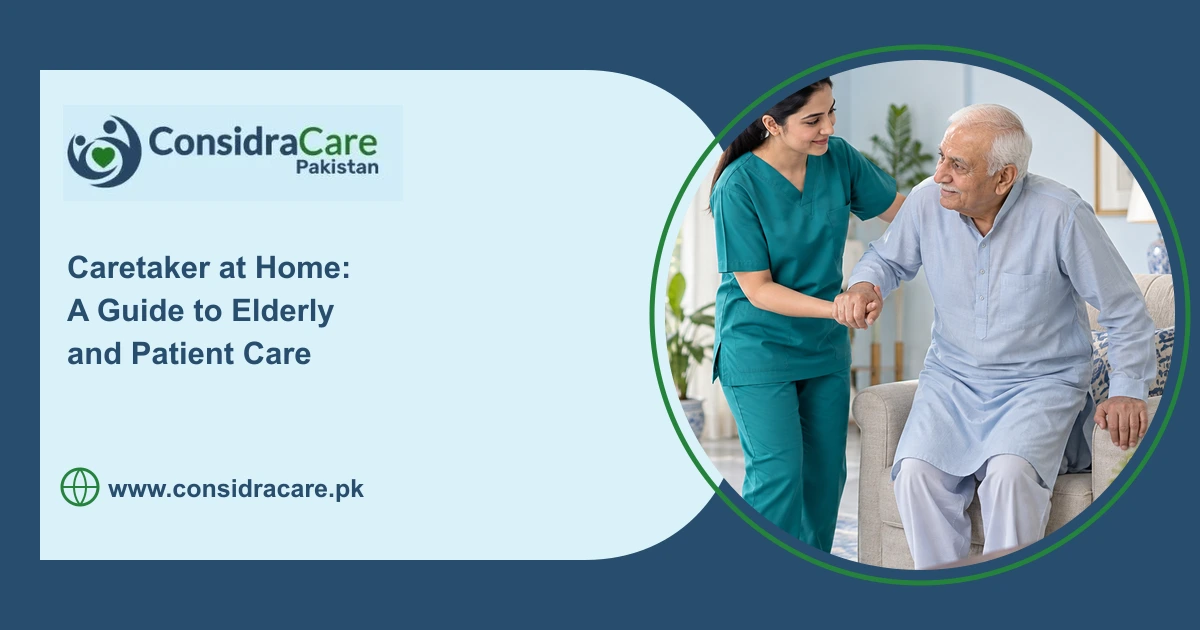
When an older adult or recovering patient begins to need help with everyday activities, families often want to support them without taking them away from familiar surroundings. A caretaker at home can provide practical assistance, companionship, and a reassuring presence while helping the person maintain as much independence as possible.
The right arrangement depends on the person’s health, mobility, daily routine, and personal preferences. Care should never be based on a job title alone. Families need a clear understanding of what help is required and whether any task needs a licensed healthcare professional.
What Does a Caretaker at Home Do?
A home caretaker supports daily living. The exact responsibilities should be agreed in advance and adjusted as the person’s needs change.
Common duties include:
- helping with bathing, dressing, grooming, and toileting;
- preparing suitable meals and assisting with feeding;
- encouraging regular drinks and reporting poor intake;
- helping the person walk or change position using an agreed method;
- providing conversation and meaningful companionship;
- giving reminders for medicines already organised by the family or healthcare team;
- keeping the person’s immediate area, bedding, and frequently used items tidy;
- accompanying the person to appointments or family activities; and
- noting changes in mood, appetite, sleep, mobility, or behaviour and informing the family.
These tasks can overlap with the support provided by a Senior Health Companion. However, a general caretaker should not be assumed to have the qualifications required for injections, wound care, IV therapy, catheter care, or other clinical procedures. If the care plan includes medical tasks, the family should discuss home nursing services with an appropriately qualified provider.
A written list of responsibilities helps everyone understand what the caretaker is expected to do. It also prevents important tasks from being missed or unsuitable duties from being added informally.
Who May Benefit From Home Caretaker Services?
Caretaker services can be useful whenever a person is safe to remain at home but needs regular assistance, observation, or company.
Older adults who need help with everyday activities
An elderly person may be largely independent but find bathing, dressing, preparing meals, or moving around the home increasingly difficult. A caretaker can provide support without taking over tasks the person can still do safely.
People who live alone
Living alone can become challenging when mobility, eyesight, hearing, or memory changes. Regular assistance can make meals, personal care, and daily routines more manageable while giving relatives a dependable point of contact.
Patients returning home after hospital treatment
After discharge, a patient may feel weak or need temporary help with meals, hygiene, walking, and appointments. The caretaker’s role should follow the discharge instructions. Any procedure or clinical observation requested by the medical team must be assigned to a suitably qualified professional.
People with limited mobility
Arthritis, weakness, stroke-related limitations, or recovery from an operation can make movement difficult. The caretaker should follow any transfer or exercise method recommended by the person’s doctor or physiotherapist rather than improvising.
Bed-bound patients needing personal support
A bed-bound person may require assistance with hygiene, meals, comfort, and communication. The family should obtain professional guidance on positioning, skin care, feeding, equipment, and any other task that carries a clinical risk.
People living with dementia
A person with dementia may need a familiar routine, reminders, companionship, and closer supervision. Experience with memory loss and responsive behaviours is especially important because dementia affects people differently.
Families experiencing caregiver strain
Relatives often provide care with great commitment, but continuous responsibility can affect sleep, work, and health. Scheduled professional support can give family caregivers time to rest while allowing them to remain involved in decisions and companionship.
Overseas families arranging care in Pakistan
When children or relatives live abroad, a reliable caretaker can provide an important local presence. The arrangement works best when the family agrees on regular updates, a primary local contact, and a process for reporting changes.
Choosing a Caretaker for an Elderly Person
Technical experience matters, but a successful match also depends on patience, reliability, and respect. An older person is more likely to accept help from someone who listens, explains what they are doing, and avoids making them feel powerless in their own home.
Look for a caretaker who:
- speaks respectfully to the older person rather than only addressing the family;
- understands which activities the person wants to continue independently;
- is comfortable with the required level of personal care;
- communicates clearly in the person’s preferred language;
- can follow household, cultural, dietary, and prayer routines;
- responds calmly when the person is tired, embarrassed, or reluctant;
- keeps agreed records and provides updates on time; and
- arrives reliably and follows privacy boundaries.
Personal-care preferences should be discussed sensitively. Some people are more comfortable receiving bathing, dressing, or toileting assistance from a caretaker of a particular gender. Families should raise this when arranging care rather than after the placement begins.
Whenever possible, involve the older person in the decision. A short introductory meeting can show whether conversation feels natural and whether the caretaker pays attention to the person’s wishes. If the person can express a preference, that preference should carry real weight.
Continuity also matters. Seeing the same caretaker regularly can make routines easier and helps the worker notice small changes. If more than one person will cover the schedule, the provider should explain how handovers and care notes will remain consistent.
What Changes When the Person Has Dementia?
Dementia care requires more than supervision. Memory loss, reduced judgement, communication difficulties, and changes in perception can affect how the person experiences ordinary tasks.
Familiarity is often helpful. Keep mealtimes, personal care, rest, prayer, and favourite activities reasonably consistent. Introduce changes gradually and use short, calm explanations rather than giving several instructions at once.
Meaningful activities should reflect the person’s history and interests. Looking through family photographs, folding clothes, listening to familiar recitation or music, gardening, or helping with a simple household task may offer connection without making the person feel tested.
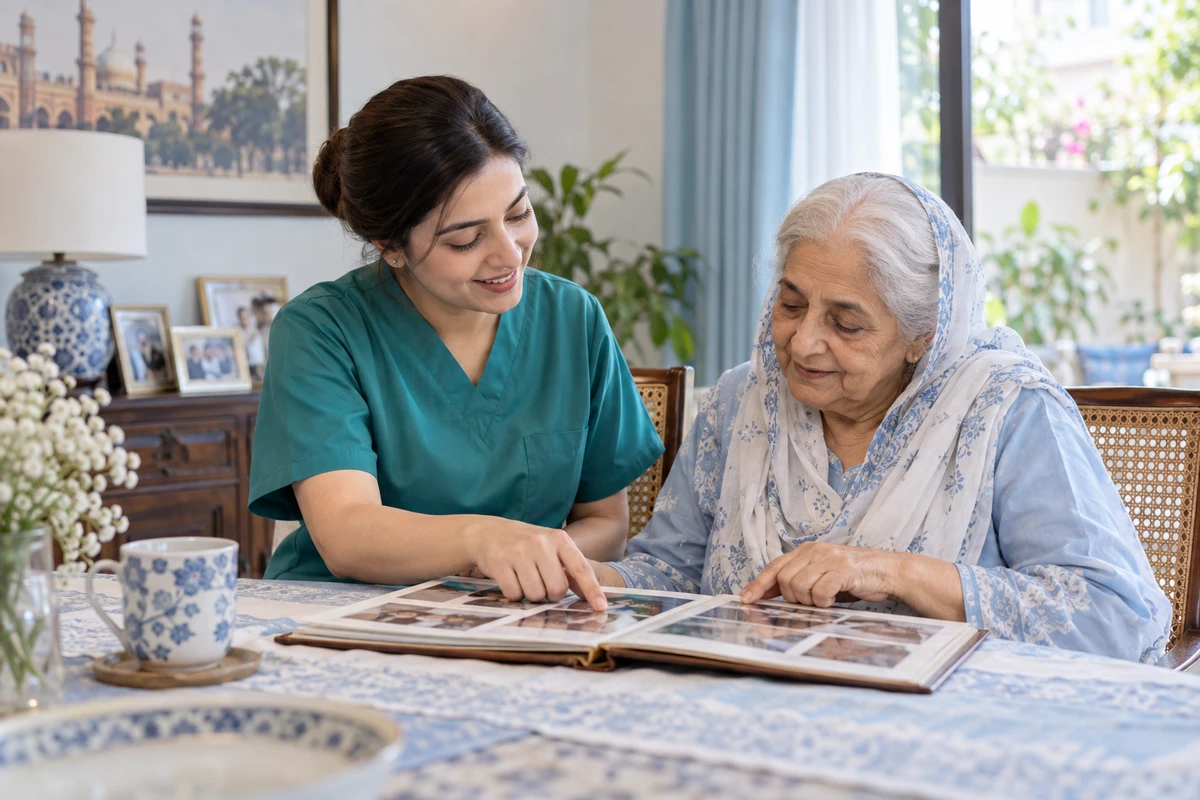
A caretaker should learn what usually comforts the person and what may trigger distress. Refusal is not necessarily stubbornness. The person may be frightened, uncomfortable, unable to understand the request, or overwhelmed by noise and hurried communication. Pausing and trying again gently can be more effective than arguing.
The home environment can also affect confidence. The NHS recommends practical dementia-friendly measures such as good lighting, reducing glare and shadows, removing trip hazards, and using visual contrast where helpful. Families can review its dementia-friendly home guidance alongside advice from the person’s own healthcare professionals.
Night-time restlessness or wandering requires a specific plan. Doors, stairs, bathrooms, and outdoor areas should be considered without using restrictions that create new risks. The family should tell the caretaker who to contact and what to do if the person leaves a safe area or becomes unusually distressed.
Behaviour that changes suddenly should be reported promptly rather than automatically attributed to dementia. Pain, infection, medicine effects, dehydration, poor sleep, or another health problem may contribute to an abrupt change. Families seeking condition-specific support can review ConsidraCare’s Alzheimer’s and dementia care service.
Final Caretaker Selection Checklist
Before confirming an arrangement, make sure that:
- the caretaker’s identity and relevant experience have been verified;
- responsibilities and excluded tasks are written clearly;
- the caretaker has experience appropriate to the person’s needs;
- language, gender, privacy, food, and cultural preferences are documented;
- mobility instructions from healthcare professionals are available;
- emergency contacts and the primary family contact are easy to find;
- the update method and frequency are agreed;
- the working schedule, rest periods, and handovers are clear;
- backup cover has been discussed; and
- an early review date has been set.
The first arrangement does not have to be permanent. Review how the person responds, whether tasks are being completed consistently, and whether the level of care is still appropriate. A good caretaker relationship protects dignity as well as comfort.

Frequently Asked Questions
Can two caretakers be needed for continuous home care?
Yes. Continuous care normally requires a sustainable rota so each caretaker has adequate rest. The number of workers depends on shift length, the person’s needs, and how the provider manages handovers. Families should confirm who covers breaks, leave, and unexpected absence.
How should a family introduce a new caretaker to an older person who resists help?
Begin with a calm introduction and a limited, familiar task rather than changing the entire routine on the first day. Explain the caretaker’s role in respectful language, involve the older person in small choices, and allow time for trust to develop. Persistent resistance may signal discomfort, fear, pain, or a poor match that needs review.
Are caretaker services available during both daytime and night-time hours?
Availability depends on the provider and location. Families may be able to arrange daytime, night-time, 12-hour, or rotating support. The schedule should reflect when assistance is genuinely needed and should include clear handovers between workers.
This article provides general information and does not replace medical assessment or advice from the person’s healthcare professionals.

