


Basil seeds—also called tukhm malanga, sabja, tukmaria or falooda seeds—are the small black seeds of sweet basil (Ocimum basilicum). They develop a translucent, gel-like coating after soaking and are commonly added to drinks and desserts across South Asia, including Pakistan.
They provide fibre, plant-based fat, protein, minerals and naturally occurring plant compounds. However, basil seeds are a food, not a treatment for diabetes, high cholesterol, obesity or any other medical condition. Much of the research on their possible health effects is preliminary or indirect.
What Are Basil Seeds?
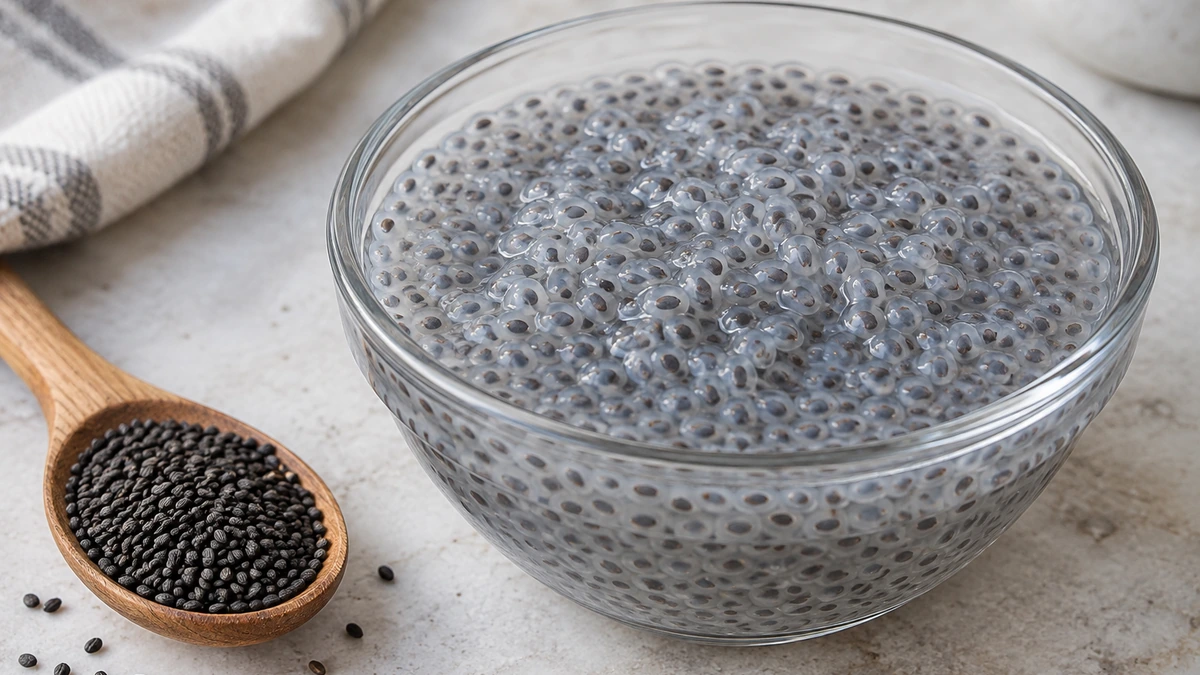
Edible basil seeds usually come from sweet basil. Although they resemble chia seeds, they come from a different plant and behave differently in water. Dry basil seeds are hard and black. When soaked, each seed forms a soft greyish coating while its centre remains dark.
Buy seeds clearly labelled for food use. Seeds intended for planting may have been treated with agricultural products and should not be assumed to be edible.
Basil Seeds Nutrition
Basil seeds contain carbohydrate, fibre, protein and fat. Their fat includes alpha-linolenic acid (ALA), an essential plant-based omega-3 fatty acid. They also contain minerals such as calcium, potassium and magnesium, as well as phenolic compounds and flavonoids.
There is no single universal nutrition profile for basil seeds. A peer-reviewed review of basil-seed research found wide variation according to species, growing conditions, origin and laboratory method. Reported protein, fibre and fat values therefore should not be treated as a standard nutrition label for every product.
| Nutritional feature | Why it matters | Important limit |
|---|---|---|
| Dietary fibre and mucilage | Absorb water and create the characteristic gel | A sudden large increase may cause digestive discomfort |
| ALA omega-3 | An essential fatty acid that must come from food | ALA is not the same as the EPA and DHA found in oily fish |
| Protein | Contributes to total dietary protein intake | A normal culinary serving is not a complete meal or major protein portion |
| Minerals | May contribute calcium, magnesium, potassium and other minerals | Amounts vary among products and should not replace a varied diet |
| Phenolic compounds | Show antioxidant activity in laboratory testing | Laboratory antioxidant activity does not prove disease prevention in people |
The US National Institutes of Health explains that ALA is one of the main omega-3 fatty acids and that the body converts only a limited amount of it into EPA and DHA. Basil seeds can contribute ALA, but they should not be described as nutritionally identical to fish or fish oil. See the NIH omega-3 fact sheet for the broader evidence.
Potential Benefits of Basil Seeds
May Support Bowel Regularity
The gel-forming fibre in soaked basil seeds adds water-holding material to the diet. Adequate fibre and fluids can support normal bowel function, but individual responses differ. People who abruptly consume a large amount of fibre may experience gas, bloating, cramps or diarrhoea instead.
If digestive regularity is your main concern, it may also help to understand established fibre options such as ispaghol or psyllium husk. Basil seeds and ispaghol are not interchangeable treatments, especially for persistent symptoms.
May Help You Feel Full
Foods containing fibre can contribute to fullness, and soaked basil seeds add volume and texture to yoghurt, oats or drinks. This may make them useful within a balanced eating pattern. It does not mean they melt body fat or cause weight loss on their own. Total food intake, activity, sleep, health conditions and medicines remain more important.
Provide Plant-Based ALA Omega-3
ALA is an essential fatty acid, so it must come from food. Basil seeds can be one source alongside walnuts, flaxseed, chia seeds and certain vegetable oils. Evidence about omega-3 fats as a group should not be used to claim that basil seeds alone prevent heart disease.
Supply Minerals and Plant Compounds
Basil seeds contain minerals and several phenolic compounds. These make them a useful food ingredient, but their amounts vary. Claims that they prevent cancer, cure inflammation, boost immunity or treat infections go beyond what human research on whole basil seeds has established.
What the Evidence Does Not Yet Prove
Laboratory, animal and extract studies can suggest questions for future research, but they do not establish that ordinary servings of whole basil seeds treat disease in people. Current evidence does not justify presenting basil seeds as a proven way to:
- control diabetes or replace glucose-lowering treatment;
- lower cholesterol without other dietary or medical measures;
- produce rapid or targeted weight loss;
- “detox” the body;
- treat anxiety, acne or hair loss; or
- prevent heat exhaustion or dehydration by “cooling” the body.
Sabja drinks may feel refreshing in hot weather, but hydration comes from the fluid itself. Sweetened falooda, syrups and bottled drinks may also contain substantial added sugar.
How to Soak Basil Seeds Safely
- Check that the package identifies the seeds as food-grade basil or sabja seeds.
- Place a small culinary amount in a clean glass or bowl.
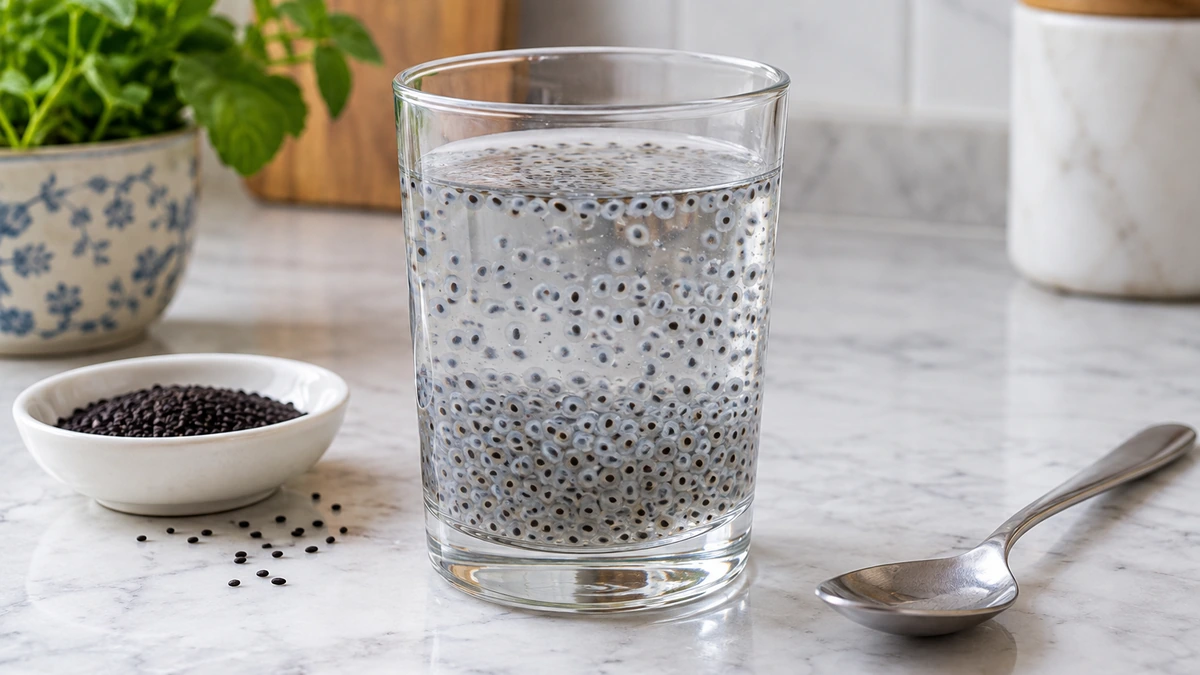
- Add plenty of water and stir so the seeds do not clump together.
- Leave them for about 15 minutes, or follow the package directions. They are ready when each black centre has a fully developed translucent coating.
- Stir again and add the soaked seeds to your chosen food or drink. If you strain them, do not let them dry into a clump.
Do not swallow a spoonful of dry basil seeds and then chase it with water. Because the seeds swell, dry or inadequately hydrated seeds may be difficult to swallow. Anyone with a swallowing disorder should ask a clinician or speech and language therapist whether gel-forming seeds are appropriate.
How to Use Basil Seeds
Soaked basil seeds have a mild flavour and a soft, slightly crunchy texture. Practical uses include:
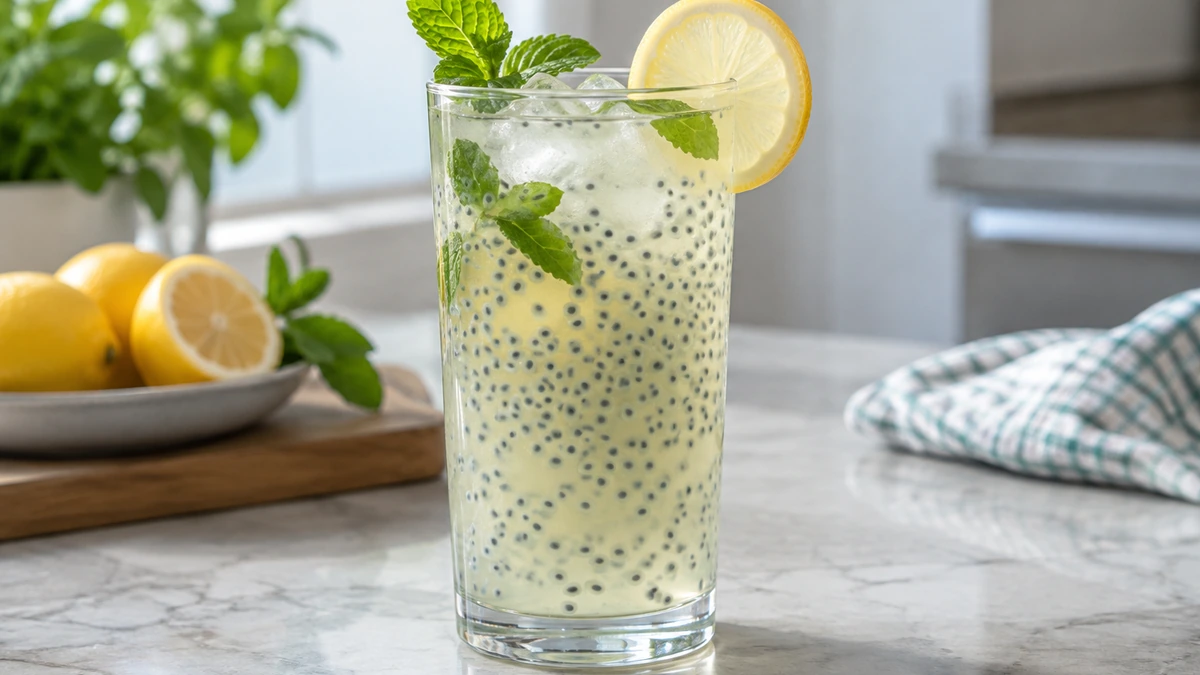
- stirring them into lemon water or unsweetened lemonade;
- adding them to lassi, milk or yoghurt;
- using them in falooda or pudding while keeping syrup and sugar portions modest;
- mixing them into oats or smoothies;
- adding them to soups or other liquid dishes; and
- using ground seeds in selected baking recipes.
Begin with a small food portion rather than adopting a large “daily dose.” Product directions, the rest of your diet and your tolerance to fibre matter more than a universal internet rule. For other familiar culinary seeds, see the guides to saunf and methi dana.
Basil Seeds vs Chia Seeds
| Feature | Basil seeds | Chia seeds |
|---|---|---|
| Plant | Usually Ocimum basilicum | Salvia hispanica |
| Appearance | Usually uniformly black | May be black, grey, brown or white |
| When soaked | Develop a visible gel coating relatively quickly | Form a thicker gel throughout the liquid |
| Common use | Usually soaked before adding to drinks and desserts | Used soaked, mixed into foods or sometimes sprinkled dry |
| Nutrition | Provides fibre, ALA, protein and minerals; composition varies | Provides fibre, ALA, protein and minerals; more standard food-composition data are available |
| Best choice | Choose for the distinct texture and traditional uses | Choose for versatility and wider availability |
Neither seed is automatically “better.” The best option depends on preparation, availability, texture preference and the rest of the diet. Read the complete guide to chia seeds for more detail.
Side Effects and Precautions
Most concerns relate to fibre, hydration and swallowing rather than a unique toxic effect from normal food use.
- Digestive discomfort: Too much too quickly may cause gas, bloating, abdominal cramps or diarrhoea.
- Choking or swallowing difficulty: Dry or poorly hydrated seeds can expand and clump. Extra caution is needed for young children, frail older adults and anyone with dysphagia.
- Allergy: Stop eating the food and seek urgent care for breathing difficulty, facial or throat swelling, faintness or another severe reaction.
- Pregnancy and breastfeeding: Ordinary food use and concentrated extracts are not the same. Ask a qualified clinician before taking large or supplement-style amounts.
- Medicines and medical conditions: People using medicines for diabetes, blood pressure or blood clotting, or those preparing for surgery, should discuss major dietary changes or concentrated basil products with their clinician.
Do not stop or adjust prescribed medicine because of basil seeds. Seek medical advice for ongoing constipation, unexplained weight loss, bleeding, severe abdominal pain, repeated choking, or persistent difficulty swallowing.
How to Choose and Store Basil Seeds
- Choose a sealed product labelled for human consumption.
- Check the ingredient list, expiry date and storage directions.
- Avoid damp, musty-smelling, discoloured or insect-damaged seeds.
- Store dry seeds in a tightly closed container away from heat and moisture.
- Refrigerate prepared foods promptly and follow ordinary food-safety rules.
Key Takeaway
Basil seeds are a fibre-rich, gel-forming food that also provides ALA omega-3, protein, minerals and plant compounds. They can add texture and variety to familiar Pakistani drinks and meals when properly soaked.
The strongest reasons to eat them are culinary enjoyment and nutritional variety—not promises to cure disease or deliver rapid weight loss. Use food-grade seeds, soak them thoroughly, introduce fibre gradually and seek individual advice when swallowing problems, pregnancy, surgery, medicines or chronic illness make dietary changes more complex.
Frequently Asked Questions
What are basil seeds called in Pakistan?
They are commonly sold as sabja, tukmaria or falooda seeds. Check that the package identifies them as edible basil seeds.
Are basil seeds and chia seeds the same?
No. They come from different plants. Both form a gel in liquid and provide fibre and ALA, but their appearance, texture and common uses differ.
Can you eat basil seeds without soaking them?
Soaking is the safer and more usual approach. Dry seeds can swell and may be difficult to swallow, particularly for children or people with swallowing difficulties.
How long should basil seeds be soaked?
About 15 minutes is commonly sufficient, although package directions should take priority. Use plenty of water and wait until a translucent coating fully surrounds each seed.
Can basil seeds help with constipation?
Their fibre may support bowel regularity when combined with adequate fluid, but they are not a guaranteed treatment. Persistent or severe constipation requires medical advice.
Do basil seeds cause weight loss?
No food selectively burns fat. Fibre may contribute to fullness, but lasting weight change depends on the overall eating pattern, activity, sleep, health and medicines.
Are basil seeds suitable for people with diabetes?
They can be used as food, but they do not replace diabetes treatment. People taking glucose-lowering medicine should discuss substantial dietary changes with their clinician and consider the sugar in drinks or desserts containing sabja.
Can children and older adults consume basil seeds?
Swallowing ability matters more than age alone. Seeds must be fully hydrated, and they may be unsuitable for a young child or anyone with chewing or swallowing difficulty unless a qualified professional confirms they are safe.
Can basil seeds be consumed every day?
Some people tolerate regular culinary use, but daily consumption is not necessary. Start with a small amount, drink enough fluid and vary your sources of fibre, fats and minerals.
Do basil seeds really cool the body?
Sabja drinks are traditionally enjoyed in hot weather and can feel refreshing. There is not strong clinical evidence that the seeds independently lower body temperature or treat heat illness.

