


The benefits of almonds include useful nutrients, a more filling snack and potential improvements in LDL cholesterol when they replace less nutritious foods. Known as badam in Pakistan, almonds provide unsaturated fats, plant protein, fibre, vitamin E and magnesium. They can fit into everyday meals without needing to be soaked, peeled or eaten at a special time.
The practical question is how to include them. A measured portion can complement a balanced diet, but a large bowl adds substantial energy. Here is what the evidence supports, how to choose a portion and when extra care is needed.
What Are the Main Benefits of Almonds?
May Help Lower LDL Cholesterol
Almonds contain mostly unsaturated fats. Replacing snacks rich in saturated fat or refined carbohydrates with almonds can improve the overall quality of your diet.
In the six-week ATTIS randomised controlled trial, adults who ate almonds instead of the comparison snacks had lower LDL cholesterol. However, the trial did not find improvements in every outcome: blood pressure, glucose and body composition did not differ significantly between groups. The study was funded by the Almond Board of California.
This supports a sensible food swap, not a promise that almonds prevent heart attacks or replace prescribed medicine. If you regularly eat biscuits with tea, consider replacing some of that snack with a measured portion of plain almonds. Combine this with broader heart-healthy daily habits.
Can Make Snacks More Filling
The combination of fibre, protein and fat can help make a snack satisfying. Almonds may therefore be useful when you want something that lasts longer than a sweet drink or a few sweets.
They are still energy-dense. Adding several handfuls on top of your usual meals is different from replacing another snack. For weight management, put your portion in a small dish rather than eating directly from a large packet. There is no need to treat almonds as a weight-loss supplement or expect them to target belly fat.
Can Fit Into a Diabetes-Friendly Eating Pattern
Plain almonds contain relatively little carbohydrate alongside fibre, protein and fat. This makes them a possible snack choice for someone managing diabetes, depending on their overall meal plan and energy needs.
That does not mean almonds reliably lower everyone’s blood sugar. The meal as a whole, portion size, activity and prescribed treatment all matter. Honey-coated almonds and sweetened badam drinks also differ from plain nuts because their added ingredients change the carbohydrate content.
Include almonds within diabetes-friendly meal planning, rather than using them to replace treatment. Follow your usual monitoring plan and discuss substantial diet changes with your clinician or dietitian.
Provide Vitamin E, Magnesium and Other Nutrients
Vitamin E helps protect cells from oxidative damage. Magnesium contributes to normal nerve and muscle function, energy production and bone structure. Almonds also supply some calcium, phosphorus and plant protein.
These are normal nutrient functions, not evidence that a daily handful treats a deficiency or prevents a particular disease. A varied diet remains important: almonds cannot provide everything that vegetables, pulses, whole grains, dairy or suitable alternatives contribute.
Their fibre adds to your daily intake and can support bowel regularity as part of an overall fibre-containing diet. Increase fibre gradually if you are not used to it; a sudden large portion of nuts may leave you uncomfortable.
Almond Nutrition and a Practical Daily Portion
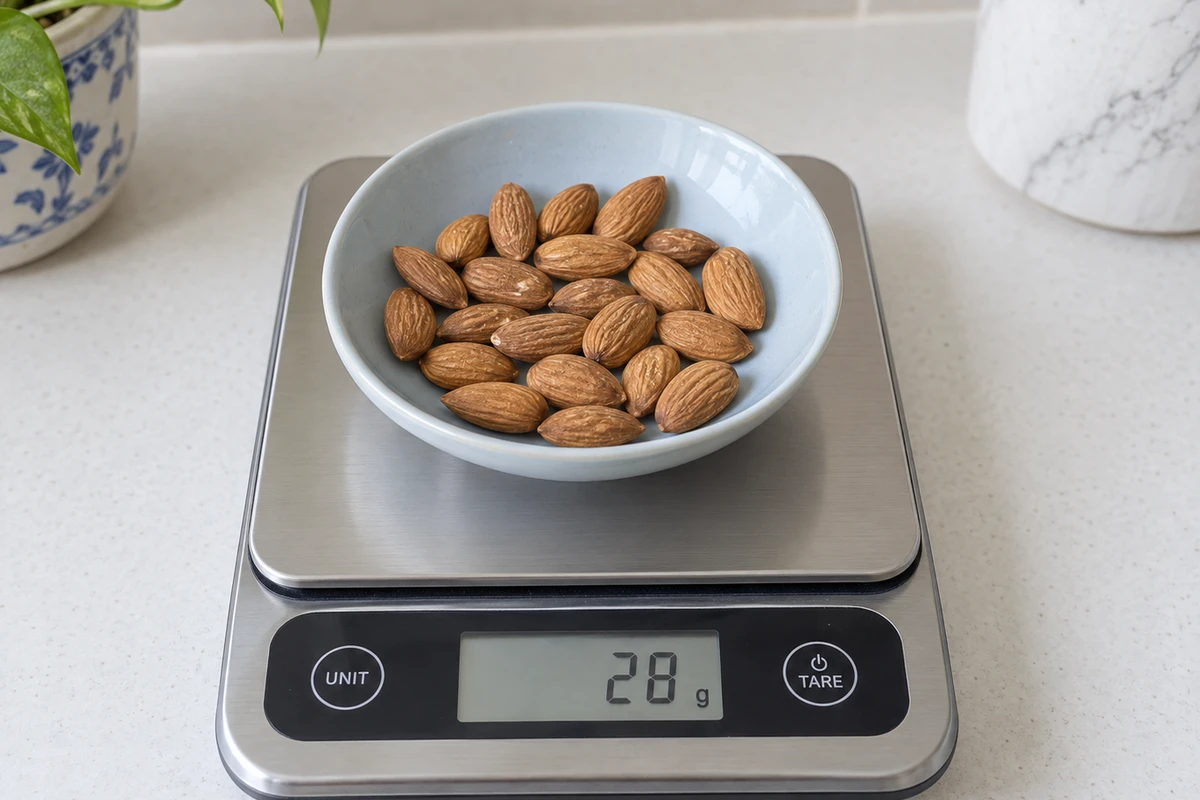
A commonly used serving is about 28 g, or roughly 23 almonds. Nut size varies, so the count is a guide rather than an exact measurement. Weighing a portion once can help you recognise it in your usual bowl.
| Nutrient | Approximate amount per 1 oz serving |
|---|---|
| Energy | 165 kcal |
| Protein | 6 g |
| Total fat | 14 g |
| Carbohydrate | 6 g |
| Fibre | 3 g |
Approximate rounded values from Harvard T.H. Chan School of Public Health’s The Nutrition Source, “Almonds.” Product labels and preparation methods may give slightly different figures.
This is a serving reference, not a compulsory daily dose. A smaller portion may suit your appetite, budget or the rest of your diet. If you also eat other nuts, count them together rather than treating each type as an additional allowance.
Almonds are optional. You do not need to buy them every day to eat well, and they should not displace your main meals or other nutritious foods.
Raw, Roasted or Soaked: Which Almonds Should You Choose?
Plain raw and unsalted dry-roasted almonds are both practical choices. The most useful comparison is often the ingredient list: how much salt, sugar or coating has been added?
| Type | What to consider |
|---|---|
| Raw, skin-on | Convenient and requires no preparation. |
| Unsalted dry-roasted | A different flavour and crunch; check for added ingredients. |
| Soaked | A texture preference, with no established need to soak for better digestion. |
| Peeled or blanched | Useful in some recipes; removing the skin also removes some plant compounds. |
| Salted, honey-coated or chocolate-covered | Check sodium, added sugar and serving size. |
Soaking is a familiar household practice, but its benefits are often overstated. In a randomised crossover study involving 76 adults, soaking did not improve gastrointestinal tolerance. You can enjoy the texture if you prefer it; you do not have to soak almonds to make them a useful food.
There is also no routine need to remove the brown skin. Choose a form you enjoy and can eat safely, rather than adding preparation steps because of claims about “activating” nutrients.
Simple Ways to Add Almonds to Pakistani Meals
Start with one place where almonds fit naturally into food you already eat. For someone who can chew and swallow normally, options include:
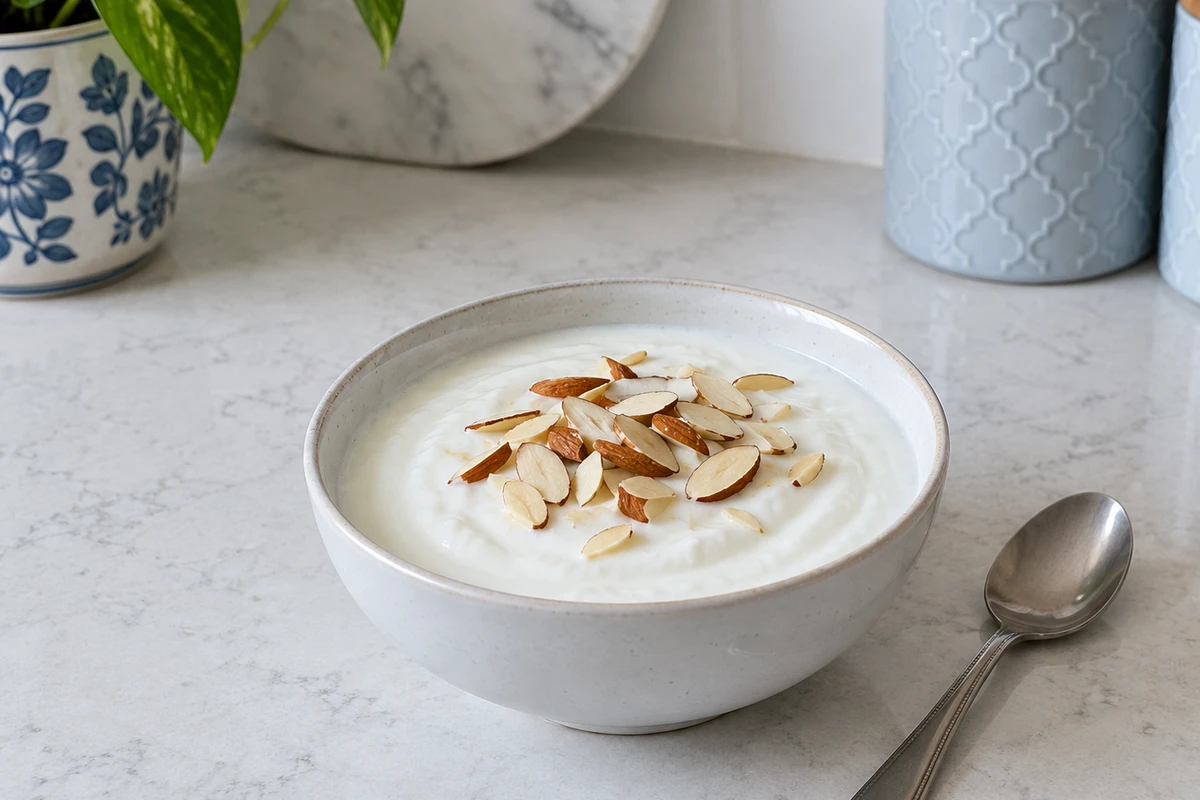
- Sprinkling sliced almonds over plain dahi.
- Adding chopped almonds to porridge or dalia.
- Taking a small, measured container as a snack during a busy day.
- Using a little almond butter in breakfast, while checking the label for added sugar and salt.
- Combining a small almond portion with a little kishmish, keeping the entire snack portion in mind.
If you enjoy mixed nuts and dried fruit, remember that raisins have a different nutritional profile: they contribute concentrated carbohydrate and natural sugars. The mixture still needs an appropriate portion.
Adding almonds does not automatically make a sweet dish an everyday health food. Badam halwa, heavily sweetened badam milk and coated nuts should be considered as complete recipes, including their sugar and fat.
Who Should Be Careful With Almonds?
People with an almond allergy: avoid almonds and almond-containing products. Check ingredient and cross-contact information. If you have another nut allergy, ask your allergy specialist which nuts are safe for you rather than experimenting at home.
Seek emergency medical help for breathing difficulty, throat or tongue swelling, or collapse after eating. Follow any prescribed allergy emergency plan.
People who develop digestive discomfort: a large portion can cause bloating or discomfort. Try a smaller amount if you tolerate almonds otherwise, and seek advice for persistent symptoms. Do not assume every reaction is simply too much fibre.
People following a prescribed diet: check with your dietitian if you have specific restrictions, such as a renal diet or a plan that limits fibre. Advice depends on the condition, laboratory results and the overall diet; there is no universal almond portion for every patient.
Extra Care for Older Adults With Eating Difficulties
Whole almonds can be difficult to chew with painful teeth or poorly fitting dentures. A swallowing problem is a separate concern: soaked nuts, chopped nuts and sticky almond butter are not automatically safe alternatives.
If an older adult coughs or chokes during meals, has a wet-sounding voice after eating, or feels food sticking, arrange prompt medical assessment. Follow the food texture recommended by their swallowing specialist and dietitian. Do not use this article to choose a modified texture.
Whole nuts are also a choking hazard for young children and should not be given to children under five.
Choosing and Storing Almonds
Choose sealed packs from a reliable seller and check the best-before date. Plain, unsalted options make it easier to control what you add to a meal. Compare prices by weight and buy an amount you can use while fresh.
Keep almonds in a tightly closed container in a cool, dry place, away from direct sunlight. In a hot kitchen, refrigeration can help preserve quality; keep the container sealed to protect against moisture and odours. Follow the packet’s storage instructions and discard nuts with mould or an unusual rancid smell.
Takeaway
Almonds can be a useful source of nutrients and a satisfying replacement for some less nutritious snacks. Choose a portion that fits your meals, favour plain varieties and treat soaking as a preference. Allergy, swallowing difficulties and prescribed diets require individual advice.
Frequently Asked Questions
Is Eating Five Almonds Enough?
Five almonds can be a small contribution to your diet. There is no minimum number that switches their benefits on. A standard serving is larger, but it is not a target everyone must reach.
Is There a Best Time to Eat Almonds?
There is no established need to eat them on an empty stomach or at a particular hour. Choose a time that fits your appetite and routine, such as part of breakfast or a planned snack.
Do Almonds Improve Memory?
Almonds contain nutrients involved in normal health, but that does not establish that eating them improves memory or prevents dementia. Persistent or worsening memory changes deserve assessment rather than a dietary remedy.
Does Almond Milk Provide the Same Nutrition as Whole Almonds?
No. Almond drinks are diluted and often strained, so their protein and fibre differ from whole nuts. Calcium and vitamin levels depend on fortification. Read the label, including added sugar, rather than assuming the products are interchangeable.

