



Sweet, juicy and naturally rich in nutrients, mango is more than a refreshing seasonal fruit. It provides vitamin C, vitamin A, folate, copper, fiber and a variety of antioxidant plant compounds.
These nutrients can contribute to immune function, digestion, eye health and overall cardiovascular wellness. However, mango also contains a meaningful amount of natural sugar, so portion size and the form in which you eat it—fresh, dried or juiced—can make a difference.
Here is an evidence-based look at the main health benefits of mango, its nutritional value and how to enjoy it as part of a balanced diet.
Mango Nutrition at a Glance:
One cup, or approximately 165 grams, of fresh mango provides:
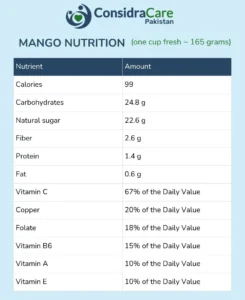
Mango also provides smaller amounts of potassium, magnesium, vitamin K, niacin, riboflavin and thiamine. Its vitamin C content is particularly notable, with one cup supplying more than half of the average daily requirement.
7 Evidence-Based Health Benefits of Mangoes:
1. Supports Normal Immune Function:
Mango contains several nutrients involved in maintaining a healthy immune system, including vitamins A, C and E, folate, copper and B vitamins.
Vitamin C supports the production and function of immune cells. It also helps the body absorb iron and contributes to normal tissue growth and repair.
Vitamin A plays an important role in maintaining the body’s natural defenses. Copper and folate are also needed for normal cell production and development.
Eating mango cannot prevent infections on its own. However, including it alongside vegetables, proteins, whole grains and other fruits can help provide the nutrients your immune system needs to function normally.
2. Provides Protective Antioxidants:
Mango contains polyphenols, a group of plant compounds that act as antioxidants in the body. These include mangiferin, catechins, anthocyanins, gallic acid, kaempferol and rhamnetin.
Antioxidants help protect cells against unstable molecules known as free radicals. Excessive free-radical activity contributes to oxidative stress, which is associated with cellular damage and the development of chronic health problems.
Mangiferin is one of the most frequently studied compounds in mango. Laboratory and animal research suggests it may have antioxidant and anti-inflammatory properties. However, these findings should not be treated as proof that eating mango prevents cancer, heart disease or other illnesses in humans.
Mango is best viewed as one source of antioxidants within a varied diet rather than as a treatment or preventive cure.
3. May Support Healthy Digestion:
Mango can contribute to digestive health in several ways.
First, it provides dietary fiber. Fiber adds bulk to stool, supports regular bowel movements and helps maintain a healthier digestive environment.
Mango also has a high water content, which can support normal hydration and make it easier for fiber to move through the digestive system.
In addition, the fruit contains digestive enzymes called amylases. These enzymes help break down complex carbohydrates into smaller sugars that the body can absorb more easily. Riper mangoes are generally sweeter because more starch has been broken down into sugar.
A small study involving adults with chronic constipation found that regular mango consumption produced greater improvements in certain symptoms than a fiber supplement providing a similar amount of soluble fiber. More research is needed to understand whether compounds other than fiber contributed to these results.
4. Supports Heart and Blood-Vessel Health:
Mango contains nutrients that can contribute to a heart-healthy eating pattern, including potassium, magnesium, fiber and antioxidants.
Potassium and magnesium support normal muscle and nerve function. They are also involved in maintaining healthy blood flow and normal blood-pressure regulation.
Dietary fiber can support cardiovascular health when it is consumed regularly as part of a diet rich in fruit, vegetables, legumes and whole grains.
Early studies of mangiferin have also explored its possible effects on inflammation, oxidative stress, cholesterol and triglyceride levels. Most of this research has not yet been confirmed in large human studies.
Therefore, mango should not be presented as a food that directly lowers blood pressure or cholesterol. Its value comes from the nutrients it adds to an overall balanced diet.
5. Supports Eye Health:
Mango provides vitamin A and antioxidant carotenoids that support normal eye function.
Vitamin A is essential for healthy vision, particularly the eye’s ability to adjust to lower-light conditions. Mango also contains lutein and zeaxanthin, two antioxidants found in the retina of the eye.
These compounds help filter certain types of light and protect eye tissues from oxidative stress. However, eating mango alone will not prevent or treat an eye condition.
For broader eye-health support, mango can be combined with other nutrient-rich foods such as leafy green vegetables, eggs, carrots, peppers, nuts and oily fish.
6. Contributes Nutrients Needed for Healthy Skin:
Mango is sometimes promoted as a beauty or anti-aging food, but such claims are often exaggerated.
Its genuine value comes from its nutrient content. Vitamin C contributes to normal tissue growth and repair, while vitamin A supports the maintenance of healthy body tissues. Mango’s antioxidants also help protect cells against oxidative stress.
These nutrients can contribute to normal skin health when they are consumed as part of a nutritionally complete diet. However, eating large quantities of mango will not clear acne, reverse aging or replace appropriate skincare and medical treatment.
Whole fruit is also a better choice than sweetened mango drinks marketed for skin health, as these products may contain significant amounts of added sugar.
7. Can Make Meals More Satisfying:
A cup of fresh mango contains fewer than 100 calories while providing water, fiber and a naturally sweet taste. This gives it a relatively low calorie density compared with many desserts and processed snacks.
The combination of water and fiber may also make whole mango more satisfying than mango juice. It can be used to add sweetness to yogurt, oatmeal or smoothies without relying entirely on added sugar.
However, mango should not be described as a weight-loss food. Body-weight changes depend on total food intake, physical activity, sleep, health conditions and other factors.
The most useful approach is to eat mango in place of a higher-calorie sweet snack—not in addition to an already full meal.
Is Mango Healthy for People With Diabetes?
Fresh mango contains more than 22 grams of natural sugar per cup, which can raise concerns for people managing diabetes or insulin resistance.
Nevertheless, natural sugar does not automatically make a fruit unhealthy. Whole mango also provides water, fiber, vitamins and antioxidants. Its effect on blood glucose depends on portion size, individual tolerance and what else is eaten with it.
A practical serving is approximately half a cup to one cup at a time. Pairing mango with protein, fiber or healthy fats may help make the meal more balanced. Suitable options include:
- Plain Greek yogurt
- Nuts or seeds
- Chia pudding
- Cottage cheese
- A meal containing vegetables and protein
Mango juice, sweetened mango shakes and dried mango are easier to overconsume and usually provide more concentrated sugar per serving.
Research directly examining fresh mango and diabetes remains limited. Mango should not be presented as a fruit that prevents or treats diabetes. People who monitor their glucose levels may find it helpful to observe their personal response after eating it.
Fresh Mango vs. Dried Mango and Mango Juice
The nutritional value of mango changes depending on how it is processed.

One cup of dried mango can contain more than 500 calories and over 100 grams of sugar, according to the reference article. A standard serving of dried fruit is therefore much smaller than a serving of fresh fruit.
For regular consumption, fresh or unsweetened frozen mango is generally the most balanced option.
How Much Mango Should You Eat?
For most people, approximately one cup of fresh mango is a reasonable serving.
A smaller portion may be more appropriate when mango is combined with other carbohydrate-rich foods or when someone needs to manage blood glucose carefully.
There is no requirement to eat mango every day. Nutritional variety is more beneficial than depending heavily on a single fruit. Rotate it with berries, apples, oranges, guava, melon, pears and other seasonal options.
Portions of dried mango should be considerably smaller because removing water concentrates both its calories and sugar.
Healthy Ways to Add Mango to Your Diet:
Mango can be included in both sweet and savory meals. Try:
- Adding fresh mango to plain yogurt
- Mixing it into oatmeal or chia pudding
- Serving it with nuts or seeds
- Adding diced mango to a green salad
- Making fresh mango salsa for fish or chicken
- Blending a controlled portion into a smoothie
- Combining it with cucumber, tomato, herbs and lime
- Freezing mango pieces for a simple summer snack
When preparing a smoothie, keep the whole fruit rather than straining it. This helps retain more of its fiber.
Possible Risks and Considerations:
Mango is safe for most people, but a few considerations are worth keeping in mind.
Some individuals may experience an allergic reaction to mango. Its skin contains compounds related to those found in poison ivy, which may cause irritation in sensitive people. Handling or eating peeled flesh may reduce contact, although anyone with a known allergy should seek professional advice.
Packaged mango products may contain added sugar, syrups or sweetened coatings. Check the ingredient list rather than assuming every mango product has the same nutritional value as fresh fruit.
People managing diabetes do not necessarily need to avoid mango, but they may need to monitor portion size and overall carbohydrate intake.
Conclusion:
Mango is a nutrient-rich fruit that provides vitamin C, vitamin A, folate, copper, fiber and antioxidant plant compounds. As part of a balanced diet, these nutrients can support immune function, digestion, eye health, normal tissue maintenance and cardiovascular wellness.
Fresh mango is generally the healthiest form because it provides fiber and water without the concentrated sugar found in dried mango or many juices.
Enjoy it in a reasonable portion, combine it with protein or healthy fats when appropriate, and treat it as one nutritious component of a varied diet—not as a cure for any health condition.

