



When someone cannot get out of bed, washing, brushing teeth and changing clothes can take planning and extra help. Hygiene care for bedridden patients should protect their comfort and privacy while keeping the skin and mouth clean.
This guide helps families organize everyday personal care at home. Follow the patient’s individual care plan, especially after surgery or when there are wounds, swallowing difficulties or limits on movement. Ask a nurse to demonstrate any task you cannot perform safely.
What Should a Bedridden Patient’s Hygiene Routine Include?
A useful routine covers body cleansing, mouth care, intimate hygiene, grooming, clothing and bedding. Encourage the person to do the parts they can manage, even if that simply means washing their face or choosing clean clothes.
Daily attention does not always mean a full-body bath every day. Agree a bathing schedule with the patient and care team that accounts for sweating, soiling, skin condition, energy and personal preference.
| Task | When to plan it |
|---|---|
| Face, hands and intimate-area cleansing | Daily, with additional cleaning whenever needed; help with hand hygiene before meals and after toileting. |
| Teeth and mouth care | Brush twice daily; additional care may be needed under a dental or swallowing-care plan. |
| Incontinence care | Check regularly and change wet or soiled products promptly, particularly after a bowel movement. |
| Skin observation | Daily and during personal care; report new changes. |
| Full bed bath and hair washing | Individualize with the care team rather than following a rigid schedule. |
| Clothes and bedding | Replace when wet or soiled and otherwise according to comfort and cleanliness. |
Prepare the Patient, Room and Supplies
Explain what you would like to do and ask permission before starting. Check whether the person prefers a particular caregiver, time of day or way of being covered. In a shared household, close the door or use a screen and ask others to give them privacy.
Keep the room comfortable and the water comfortably warm, never hot. Check the water before it touches the patient; reduced sensation can make it difficult for some people to judge temperature. Keep clean clothes and towels nearby so you can remain with them.
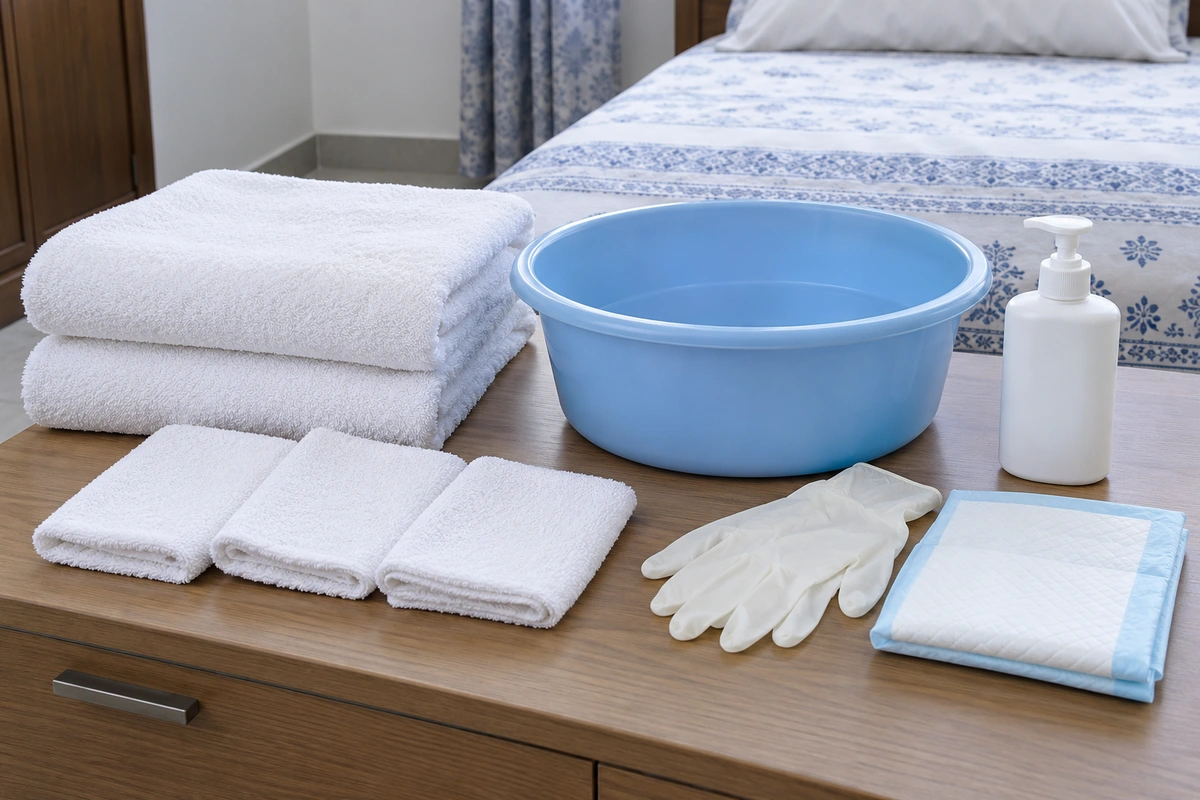
- Soft washcloths, clean towels and a clean basin, if using water.
- A gentle cleanser suitable for the person’s skin, or an appropriate no-rinse product.
- Waterproof bed protection, clean clothes, bedding and any usual continence products.
- Disposable gloves for contact with body fluids, intimate areas or broken skin.
- The person’s usual moisturizer or a barrier product recommended by their care team.
- A waste bag and a separate container for used laundry.
Wash your hands before care and after removing gloves. Keep used cloths away from clean supplies. Follow product instructions, including whether a cleanser needs rinsing.
Before turning the patient, check their movement plan. Recent fractures, surgery, pain, weakness and attached tubes can change what is safe. Arrange the help and equipment specified by the care team; do not attempt a difficult turn alone or improvise a lift.
How to Give a Bed Bath Safely
Work slowly, exposing only the area being washed. Invite feedback and allow the patient to participate. A shorter wash with a rest may be more comfortable than completing everything at once.
- Start with cleaner areas. Gently wash the face, then work through the upper body, arms, legs and feet.
- Clean one area at a time. Use a soft cloth and gentle pressure. Rinse off cleanser when required, then pat dry, including folds and between toes.
- Keep supplies clean. Replace dirty or cooling water and use fresh cloths as needed. Reserve clean supplies for intimate care.
- Wash the back only with safe positioning. Use the turning technique and assistance demonstrated for this patient.
- Finish with comfort. Apply the usual moisturizer to dry, intact skin where appropriate, dress the patient and check their position.
The MedlinePlus bed-bathing guide supports gentle washing, careful drying and checking skin during care. Do not scrub a sore area or remove dressings to complete a routine bath.
Pause if care causes pain, distress or unusual tiredness. Stop and seek help for new breathing difficulty or a sudden change in responsiveness.

Clean Intimate Areas and Manage Incontinence
Urine and stool left against the skin can cause irritation. Check continence products regularly and provide prompt cleaning after soiling. Use well-fitting products rather than adding extra layers that may trap moisture or create pressure.
Explain intimate care before touching the area, keep the rest of the body covered and wear gloves. Clean gently with fresh supplies, working from front to back, especially for someone with a vulva, and keeping stool away from the urinary opening. Avoid repeated rubbing.
Dry gently and apply a suitable barrier product if advised by the care team. Follow its instructions; more product is not necessarily better. Change gloves and clean your hands before moving from dirty care to clean tasks.
If a catheter, surgical wound or skin breakdown is present, ask the nurse for specific instructions. Do not disconnect tubing, pull on a catheter, put products into an opening or treat a wound as part of ordinary cleansing.
Report persistent soreness, leaking products or repeated skin irritation. These may need a review of the cleansing routine, product fit or continence plan.
Provide Mouth Care, Denture Care and Grooming
Teeth, Gums and Dentures
Help the patient brush their teeth twice daily with a soft toothbrush and fluoride toothpaste. Encourage independence where possible and check for pain, sores, bleeding or food remaining in the mouth. Clean dentures separately and follow the dentist’s advice on removal and storage.
Swallowing difficulty, also called dysphagia, needs an individualized approach. Use the position and products recommended for the patient; do not pour water or mouthwash into the mouth of someone who cannot safely rinse and spit.
The NHS oral-care guide for people with dysphagia explains that care must be adapted to each person’s swallowing needs. Ask for a demonstration if the person coughs during mouth care, cannot clear fluids or needs suction. Only use suction equipment after appropriate training.
People who receive nutrition through a feeding tube still need mouth care. Seek dental or clinical advice for continuing mouth pain, ulcers, bleeding or problems with dentures.
Hair, Hands, Feet and Nails
Comb hair gently and plan washing around the person’s comfort and energy. An appropriate no-rinse hair product may help when water-based washing is difficult. Avoid moving the neck or shoulders beyond any prescribed limits.
Keep hands and nails clean, and dry the spaces between fingers and toes. Ask a healthcare professional about nail care when the patient has diabetes, poor circulation, reduced sensation or thick or damaged nails. Do not cut into the skin or attempt to remove corns or calluses.
Keep Clothing and Bedding Clean Without Unsafe Lifting
Replace wet or soiled clothing, sheets and underpads promptly. Choose comfortable clothing that is easy to change without pulling painful joints. Keep the resting surface dry and smooth, checking for folded pads or objects beneath the patient.
Changing a sheet with someone still in bed requires a safe handling plan. Ask a nurse or physiotherapist to show you how to do it for this person and whether another trained helper or equipment is needed. Do not drag the patient across the sheet or pull them up by their arms.
After surgery, the treating team’s movement and wound-care instructions take priority. Families arranging personal care after surgery should confirm what help is needed before attempting bathing or linen changes.
Keep soiled laundry separate from clean supplies, avoid shaking it and wash your hands after handling it. Follow the laundry and infection-control advice provided for the patient’s condition.
Check the Skin and Know When to Seek Help
During care, look at skin folds and pressure areas such as the heels, hips, tailbone and elbows. Notice changes from the person’s usual skin appearance, along with new warmth, swelling, firmness, tenderness or broken skin.
Redness may be less obvious on darker skin; a patch may instead look darker, purple or otherwise different. New discomfort or a change in texture matters even when the colour change is subtle.
Cleaning alone does not prevent pressure injuries. The care team should assess pressure risk and advise on repositioning and suitable support surfaces. Do not massage or rub a discoloured pressure area, and do not replace the patient’s repositioning plan with a generic timetable.
- Arrange prompt assessment: a new persistent colour change, blister, open area, unexplained skin pain or recurring rash.
- Seek urgent medical assessment: hot or swollen skin around a sore, pus, fever, or severe or worsening pain.
- Get emergency help: severe breathing difficulty, choking with inability to breathe, or sudden unresponsiveness.
Describe when the change began and what you observed. Avoid applying antiseptics, powders or wound treatments unless they are part of the patient’s prescribed care.
When Home-Care or Nursing Support May Help
Professional help may be needed when turning is unsafe, care repeatedly causes pain, skin problems keep returning or the patient needs support with wounds or clinical devices. It is also reasonable to ask for help when the daily workload exceeds what the family can safely manage.
ConsidraCare Pakistan’s home nursing services include personal-care support such as bathing and hygiene assistance. Discuss the patient’s mobility, skin condition, continence needs and any tubes or dressings so the required level of support can be assessed.
For families considering their options, this guide to when nursing care at home may help provides further context. Everyday hygiene assistance and clinical nursing tasks require different skills; explain both needs when arranging care.

A Simple Checklist for Family Caregivers
Use the routine above as a starting point, then keep a short handover note for everyone involved. Record:
- Which care tasks were completed and when.
- What the patient managed independently, preferred or declined.
- Any new skin or mouth changes, discomfort or difficulty with care.
- Who was contacted about concerns and what advice was given.
- What the next caregiver needs to follow up.
A consistent routine is easier to maintain when tasks are shared and concerns are recorded early. Keep the patient’s comfort and choices central, and ask for a demonstration whenever a task feels unsafe or unfamiliar.

