


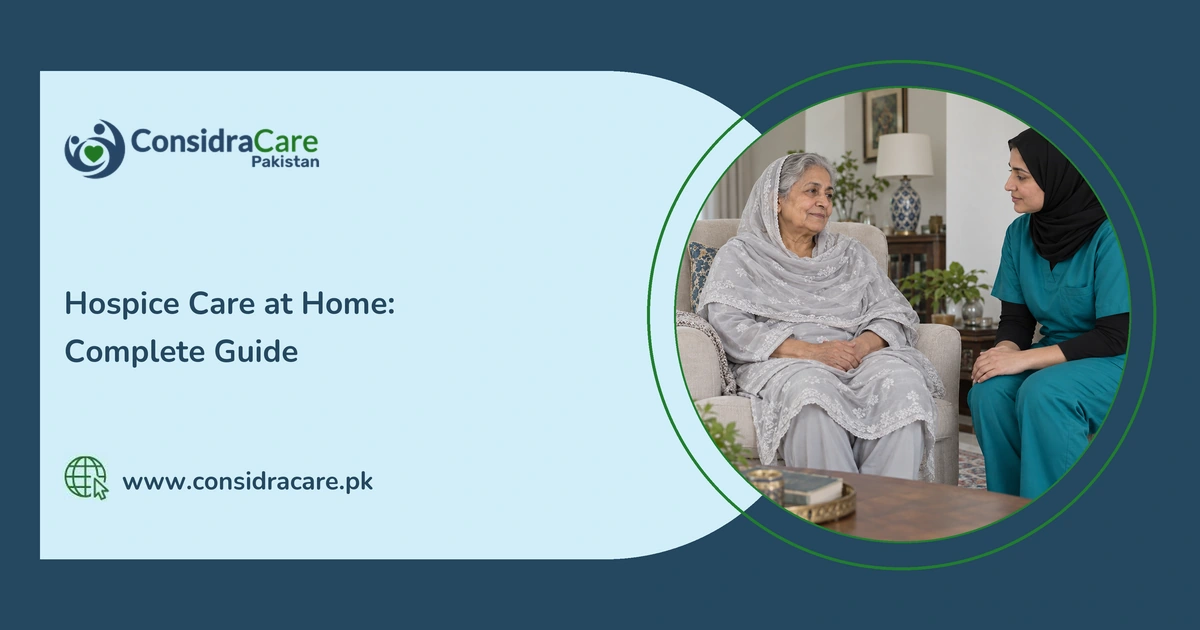
When someone you love is approaching the end of life, being at home may matter deeply to them. Families often want the same thing, while feeling uncertain about what care involves and where professional support fits in.
Hospice care at home focuses on comfort, dignity and support in familiar surroundings. This guide explains its purpose, the help families can discuss with a care team, and questions to ask before choosing a provider in Pakistan.
What Is Hospice Care at Home?
Hospice care at home is an approach to supporting a person nearing the end of life in their own home. The emphasis is on relieving distress and supporting the person’s quality of life, alongside the needs of those close to them.
Hospice describes a type of care, as well as facilities that provide it. Receiving care at home does not mean every professional service will be available there, or that a nurse will remain at the bedside continuously. The actual arrangements depend on the person’s needs and the provider’s agreed scope.
Palliative care is broader: it can begin earlier in a serious illness and accompany treatment intended to control the disease. The World Health Organization describes palliative care as addressing physical, psychological, social and spiritual suffering. Hospice is generally associated with care nearer the end of life, but terminology and entry criteria differ between healthcare systems.
For a fuller comparison, read about how hospice and palliative care differ. A prognosis threshold used by an overseas programme should not be assumed to be a universal requirement in Pakistan.
When Should Families Discuss Home Hospice Care?
Start the conversation when a serious illness is progressing, symptoms are becoming harder to live with, or the person wants to discuss the balance between treatment and comfort. You do not need to wait until a crisis to ask the treating doctor what support is appropriate.
Advanced cancer, dementia, heart disease and other serious conditions can raise these questions. A diagnosis alone does not decide whether hospice is appropriate; the person’s overall condition, goals and clinical assessment matter.
Useful questions for the treating team include:
- What are the realistic goals of the treatments currently being offered?
- Would specialist palliative or end-of-life support help now?
- Is home a suitable setting for the care this person needs?
- Which treatments would continue, and what would each treatment aim to achieve?
- How can we include the person’s preferences in decisions?
A comfort-focused approach still requires active care and clinical judgement. Families should not stop prescribed treatment or change medicines because they have read a general explanation of hospice. Discuss each decision with the responsible clinician.
Our guide to broader end-of-life care provides related background for these conversations.
What Support Can Be Provided at Home?
Support may involve several professionals working alongside the family. The following are areas to ask about, rather than a list of services automatically included in every care package.
- Clinical assessment and symptom support: the treating team assesses concerns such as pain, breathlessness, nausea or anxiety and advises on an individual plan.
- Nursing support: nursing tasks may be arranged when clinically required and within the provider’s capabilities.
- Personal care: assistance with washing, dressing and other daily needs can help preserve privacy and dignity.
- Guidance for the family: professionals can explain agreed care tasks and help relatives understand whom to contact with concerns.
- Emotional and spiritual support: this may include listening, counselling or support for the person’s beliefs, depending on their wishes and local availability.
Care should reflect the individual rather than a standard list of tasks. A personalised care plan can help record preferences and agreed support, so families have a shared reference when speaking with professionals.
Ask the treating team for clear instructions about changes that need a call and how to obtain urgent help. If there is an immediate threat to life and no clear clinical instruction covering the situation, seek emergency assistance. Do not attempt unfamiliar clinical procedures or adjust medicines independently.
Protecting Family Wellbeing and Patient Preferences
Wanting to care for someone at home does not mean one relative must manage everything. Family members may feel love, exhaustion, fear and uncertainty at the same time. Acknowledging those feelings can make it easier to ask for practical help.
Agree on manageable contributions, such as accompanying the person, arranging appointments or helping with household responsibilities. Where available, discuss replacement care or respite with the team so the main family caregiver can rest.
Marie Curie’s guidance for caring at home highlights the value of backup support and accessible care-team contacts. Its practical principles are useful, while its UK services and entitlements should not be assumed to apply in Pakistan.
Keep the person at the centre of conversations. Ask what makes them comfortable, whom they want involved and how much information they wish to receive. Speak directly to them whenever possible rather than talking only to relatives in the room.
Respect preferences about modesty, personal care and who is present during private conversations. Prayer, recitation or another spiritual practice may be comforting if the person wants it. Avoid assuming that every family or patient shares the same beliefs or wishes.
Relatives living overseas can remain involved through agreed updates, but frequent calls should not become another burden. One family contact can help keep communication consistent while protecting the patient’s privacy.
Questions to Ask Before Choosing a Provider
Describe the person’s condition and the treating doctor’s recommendations before asking a provider to suggest support. A clear explanation of what it can deliver is more useful than a broad promise of comprehensive care.
- Clinical oversight: who is responsible for clinical decisions, and how will staff communicate with the treating doctor?
- Suitable staff: which tasks require a nurse, and which can a trained caregiver undertake?
- Scope and availability: what support is included, what is excluded, and what happens if the assigned staff member cannot attend?
- Contact arrangements: whom should the family contact about a concern, and what response can the provider actually offer?
- Consent and privacy: how are the patient’s wishes, records and family updates handled?
- Written terms: can the provider supply a written care proposal and itemised quote before the family commits?
Ask for clarification whenever a term is unclear. A telephone advice service, a visiting professional and a caregiver staying in the home are different arrangements; confirm exactly what the proposal describes.
Discussing Home Support With ConsidraCare Pakistan
ConsidraCare Pakistan describes palliative care at home among its services. Its service page outlines support from caregivers and nurses for people with serious illnesses and their families.
If you are exploring hospice care at home, share the treating doctor’s recommendations and ask which elements ConsidraCare can provide for your situation. Confirm current availability in your location, the proposed staff and the limits of the service. Do not assume a palliative-care enquiry automatically includes a complete specialist hospice programme.
Contact ConsidraCare Pakistan on 0311 1000515 to discuss the support your family is seeking.
Conclusion
Hospice care at home centres on the person’s comfort, dignity and wishes. A discussion with the treating doctor can help families understand whether home care is suitable and which professional support is needed.
Choose a provider whose responsibilities and limits are clear, and leave room for family members to ask for help. The aim is care that responds to the individual, with decisions guided by their needs and preferences.
FAQs
Can someone receiving hospice care at home still have visitors or spend time outside?
Hospice care does not automatically rule out either. Let the person’s wishes and energy guide visits, and ask the care team whether an outing is suitable and what support it would require. Short, flexible visits may be easier than fixed social commitments.
How can families explain a loved one’s changing condition to children?
Use simple, honest language suited to the child’s age, and let them ask questions. Avoid describing death as sleep, which can be confusing. Ask a qualified counsellor or the care team for help if you are unsure how to explain what is happening.

