
Sleeping pills are not one type of medicine. A tablet used for short-term insomnia, an anti-anxiety medicine that causes drowsiness, and a melatonin supplement can work differently and carry very different risks.
This guide explains common types and names of sleeping pills encountered in Pakistan, their side effects, and the questions to ask before taking one. It is educational and cannot tell you which medicine is suitable for you. A doctor or pharmacist should review your symptoms, health conditions, and other medicines first.
What Are Sleeping Pills and How Do They Work?
“Sleeping pill” is an everyday term for medicines or supplements that make it easier to fall asleep, stay asleep, or adjust the timing of sleep. Prescription sleep medicines are often called sedative-hypnotics.
Many prescription options reduce activity in the brain by influencing gamma-aminobutyric acid (GABA), a chemical messenger that helps calm nerve signals. Melatonin products work differently: they influence the body’s sleep-wake timing rather than producing the same broad sedative effect.
A medicine may ease a symptom without correcting its cause. Pain, anxiety, depression, sleep apnoea, restless legs, thyroid problems, caffeine, shift work, and other medicines can all disturb sleep. That is why persistent insomnia needs assessment rather than repeated self-medication.
Types and Names of Sleeping Pills Found in Pakistan
Brand availability can change, and the same active ingredient may appear under several names. Check the generic or active ingredient on the pack instead of relying on colour, shape, or a friend’s description.
1. Z-Drugs Used for Short-Term Insomnia
Z-drugs are non-benzodiazepine sedative-hypnotics. Zolpidem is the best-known example encountered in Pakistan, with brands including Zolp and Stilnox. These names are identification examples, not recommendations.
Zolpidem may be prescribed for short-term difficulty falling asleep. It can cause next-day drowsiness, dizziness, poor coordination, memory gaps, and unusual behaviour during sleep. Dependence and rebound insomnia can also occur, particularly with longer or unsupervised use.
The Drug Regulatory Authority of Pakistan (DRAP) has issued a zolpidem safety alert about rare but serious complex sleep behaviours. These include sleepwalking, sleep-driving, preparing food, or making calls while not fully awake, sometimes without remembering the event.
2. Benzodiazepines Sometimes Used or Misused for Sleep
Benzodiazepines calm the central nervous system and are primarily used for conditions such as anxiety, seizures, or muscle spasm, depending on the medicine. Their sedating effect means some are prescribed for short periods when insomnia is linked to severe anxiety, but they are not interchangeable with dedicated insomnia medicines.
Names commonly recognised in Pakistan include:
- Bromazepam, sold under brands such as Lexotanil
- Diazepam, sold under brands such as Valium
- Lorazepam, sold under brands such as Ativan
- Alprazolam, sold under brands such as ALP or Xanax
These medicines can cause drowsiness, slowed reactions, poor balance, confusion, tolerance, physical dependence, and withdrawal. Alprazolam and bromazepam should not be treated as routine over-the-counter sleep aids simply because they can make a person sleepy.
3. Melatonin and Other Non-Prescription Sleep Aids
Melatonin is a hormone involved in the body’s internal clock. A supplement may be considered for selected sleep-timing problems, such as jet lag or a shifted sleep schedule, but it is not automatically the best treatment for persistent insomnia.
Product strength and quality can vary. Possible effects include headache, dizziness, nausea, vivid dreams, and daytime sleepiness, and melatonin may interact with other medicines. Pregnant or breastfeeding people, children, older adults taking several medicines, and people with chronic health conditions should seek professional guidance before using it.
Some allergy medicines contain sedating antihistamines. They may cause drowsiness, but repeated use can lead to tolerance and next-day impairment. Dry mouth, constipation, blurred vision, urinary difficulty, and confusion are especially concerning for older adults. Sedating antihistamines should not be used as a routine long-term insomnia treatment without medical advice.
4. Other Medicines a Doctor May Consider
In selected cases, a doctor may prescribe another medicine because the person also has depression, anxiety, pain, or a different condition contributing to poor sleep. A medicine chosen for one patient may be unsafe for another, even when both describe “insomnia.”
Do not borrow another person’s prescription or combine medicines to make them more sedating. The correct choice depends on the underlying diagnosis and the full medication list.
Sleeping Pill Types at a Glance
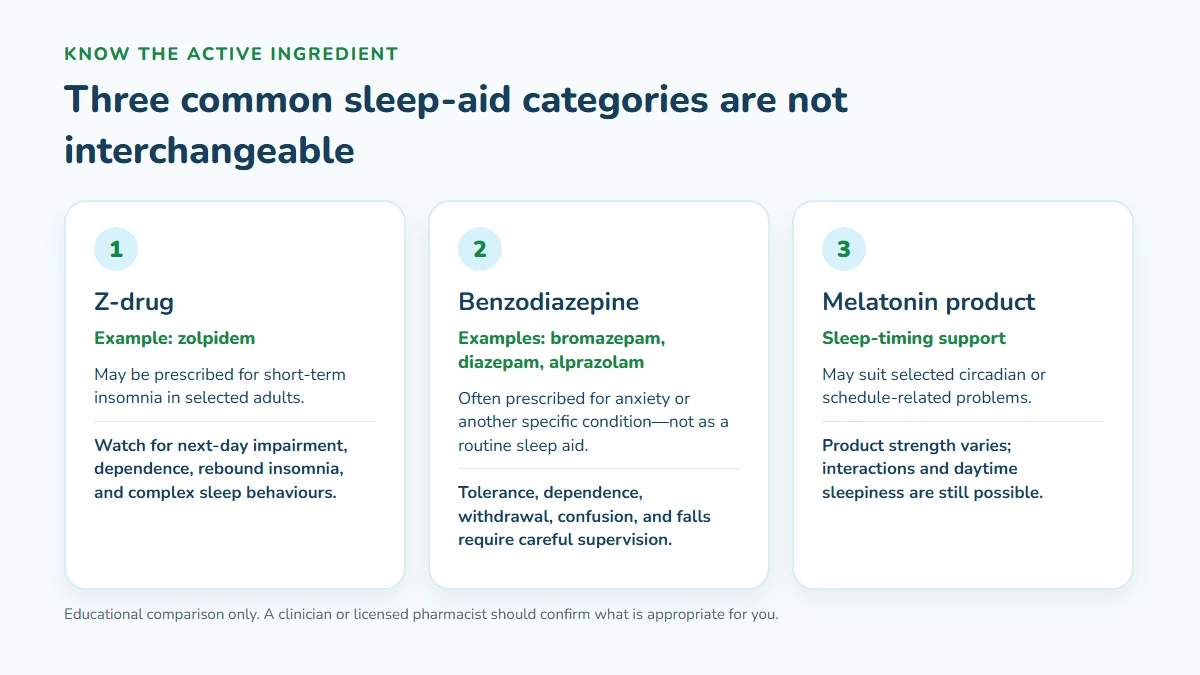
| Type | Generic examples | Names encountered in Pakistan | Main role | Important cautions |
|---|---|---|---|---|
| Z-drug | Zolpidem | Zolp, Stilnox | Short-term insomnia in selected adults | Next-day impairment, dependence, rebound insomnia, complex sleep behaviours |
| Benzodiazepine | Bromazepam, diazepam, lorazepam, alprazolam | Lexotanil, Valium, Ativan, ALP/Xanax | Primarily anxiety or other specific conditions; sometimes short-term sedation | Tolerance, dependence, withdrawal, falls, confusion, breathing suppression with other sedatives |
| Melatonin product | Melatonin | Brand names vary | Selected circadian or sleep-timing problems | Variable product strength, daytime sleepiness, interactions; limited role in chronic insomnia |
| Sedating antihistamine | Ingredient varies | Allergy and nighttime products vary | Allergy treatment; drowsiness is a side effect | Confusion, dry mouth, constipation, urinary problems, next-day impairment |
Names in this table are examples only. Availability, registration, formulation, and prescription requirements can change; confirm the active ingredient and current instructions with a licensed pharmacist or doctor.
How Does a Doctor Choose a Sleep Medicine?
A clinician first needs to understand the sleep problem. Trouble falling asleep may require a different approach from waking repeatedly or waking too early.
Important factors include:
- How long the problem has lasted and how often it occurs
- Daytime effects on concentration, mood, driving, or work
- Loud snoring, gasping, leg discomfort, pain, or nighttime urination
- Anxiety, depression, grief, stress, or substance use
- Pregnancy, breastfeeding, age, and fall risk
- Liver, kidney, breathing, heart, or neurological conditions
- Every prescription medicine, non-prescription product, and supplement being taken
A sleeping pill is only one possible part of care. The safest plan may be to treat an underlying condition, change another medicine, use behavioural therapy, or combine approaches under supervision.
Common Side Effects of Sleeping Pills
Side effects differ by class and dose, but common problems include:
- Daytime drowsiness or a “hangover” feeling
- Dizziness and poor balance
- Slower reactions and impaired driving
- Headache, nausea, or dry mouth
- Confusion or difficulty concentrating
- Short-term memory gaps
- Unsteadiness and falls, especially in older adults
Do not drive, operate machinery, climb stairs without support, or perform hazardous work if a medicine leaves you drowsy or unsteady. Even if you feel awake, reaction time and judgement may still be affected.
Serious Risks and Warning Signs
Complex Sleep Behaviours
After taking zolpidem or a related medicine, a person may rarely walk, eat, drive, or perform another activity without being fully awake. If this happens, stop the medicine and contact the prescribing healthcare professional promptly, as DRAP advises. Seek urgent help if anyone is injured, drives, becomes violent, or remains confused.
Breathing Problems, Over-Sedation, and Dangerous Combinations
Alcohol, opioid pain medicines, anti-anxiety medicines, sedating antihistamines, and other central nervous system depressants can intensify sedation. The combination may impair breathing, awareness, balance, and judgement.
Get emergency help for slow or difficult breathing, blue lips, collapse, a seizure, extreme confusion, or inability to wake the person. Treat a suspected overdose or accidental extra dose as urgent; do not wait for symptoms or try to make the person vomit.
Tolerance, Dependence, Withdrawal, and Rebound Insomnia
These terms are related but not identical:
- Tolerance means the same dose produces less effect over time.
- Physical dependence means the body has adapted to the medicine and reacts when it is reduced or stopped.
- Withdrawal can include anxiety, sweating, tremor, agitation, worsened sleep, and—in severe cases—seizures.
- Rebound insomnia means sleep temporarily becomes worse after stopping the medicine.
Do not raise the dose because the medicine seems less effective. If you have taken a benzodiazepine or prescription sleep medicine regularly, do not stop it suddenly without medical guidance. A clinician may need to create an individual reduction plan based on the drug, dose, duration, and your health.
Who Needs Extra Caution?
Professional review is particularly important for:
- Adults over 65, especially those with falls, memory problems, or several medicines
- Pregnant or breastfeeding people
- People with sleep apnoea, chronic lung disease, or nighttime breathing problems
- People with liver or kidney disease
- Anyone with a history of alcohol or drug dependence
- People with depression, suicidal thoughts, severe anxiety, or bipolar disorder
- Anyone using opioids, sedatives, antihistamines, or multiple psychiatric medicines
Older adults can remain sedated longer and may be more vulnerable to confusion, fractures, and loss of balance. Families should report new unsteadiness, daytime sleeping, memory changes, or unusual nighttime behaviour rather than assuming these are normal signs of ageing.
Before Taking Any Sleeping Pill: A Safety Checklist
- Confirm the active ingredient and why it was recommended.
- Tell the doctor or pharmacist about every medicine, supplement, and substance you use.
- Ask how and when to take it, how long the course should last, and what to do if you miss a dose.
- Check whether you must avoid driving, alcohol, or specific medicines.
- Never use another person’s prescription or take an extra dose after a poor night.
- Plan a follow-up if the medicine is not helping or causes side effects.
- Keep sedating medicines locked away from children and anyone for whom they were not prescribed.
Evidence-Based Alternatives to Sleeping Pills
For chronic insomnia, cognitive behavioural therapy for insomnia (CBT-I) is a primary treatment. It addresses the thoughts and habits that keep sleep problems going and may include stimulus control, sleep scheduling, relaxation, and cognitive techniques. The American Academy of Sleep Medicine guideline places medicines within an individual plan and recognises CBT-I as a standard treatment.
Helpful steps may include:
- Keeping a regular waking time, including weekends
- Using the bed for sleep rather than scrolling, work, or television
- Reducing caffeine later in the day
- Keeping the room dark, quiet, and comfortably cool
- Avoiding long or late naps
- Addressing pain, reflux, anxiety, depression, or breathing symptoms
- Keeping a sleep diary for one to two weeks before a consultation
Older readers and their families can also review these non-drug sleep strategies for seniors.
When Should Sleep Problems Be Assessed by a Doctor?
Arrange an assessment when poor sleep persists, affects daytime functioning, or leads to repeated use of a sleep aid. Seek help sooner if there is loud snoring or gasping, severe mood change, suicidal thinking, restless or painful legs, unexplained weight change, or unusual behaviour during sleep.
Bring a list—or photographs—of all medicine packs and supplements. A sleep diary noting bedtime, waking, naps, caffeine, and symptoms can help the clinician recognise patterns.
How ConsidraCare Can Support Safer Care at Home
For someone who finds travel difficult, a verified doctor visit at home can provide an opportunity to discuss persistent sleep concerns and review current medicines. ConsidraCare’s home nursing services may also help a family follow an established care plan and observe changes in alertness, balance, or sleep.
Caregivers and nurses should not independently choose, start, stop, or change a sleeping medicine. Prescribing and medication changes require an appropriately qualified clinician.
Conclusion
The name on a packet does not tell the whole story. Z-drugs, benzodiazepines, melatonin products, and sedating antihistamines have different purposes and risks, and some medicines commonly taken for sleep were developed primarily for other conditions.
Check the active ingredient, avoid mixing sedatives, and do not rely on a borrowed prescription or online product ranking. When insomnia persists—or a medicine causes daytime impairment, dependence, breathing problems, or unusual nighttime behaviour—seek professional assessment instead of increasing the dose.