Muscle pain can be a familiar ache after physical activity, but it can also occur with an injury, an infection, a medicine or a longer-term health condition. The location of the pain, how it started and any accompanying symptoms often provide the most useful clues.
This guide explains the common symptoms and causes of muscle pain, how doctors assess it, which treatments may help and when pain needs urgent medical attention.
What Is Muscle Pain (Myalgia)?
Muscle pain is discomfort felt in one or more muscles. Its medical name is myalgia. It is a symptom rather than a diagnosis, so the word describes what a person feels but not why it is happening.
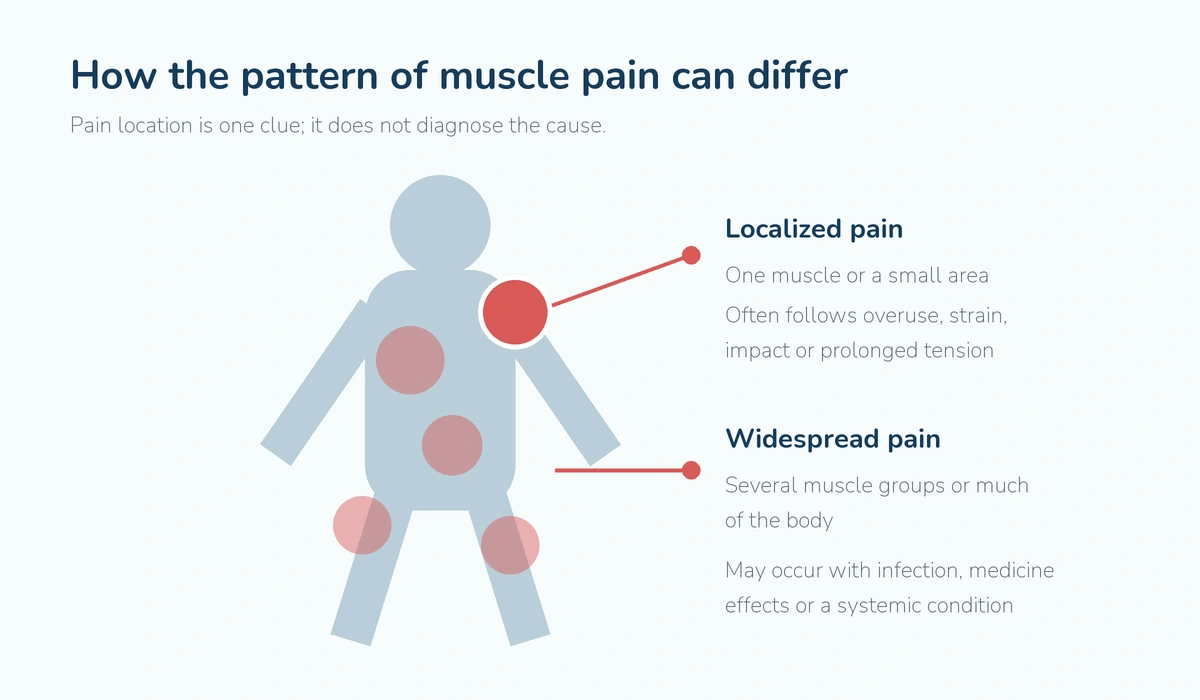
Doctors often begin by looking at the pattern:
- Localized pain affects one muscle or a small area. It is more often associated with overuse, a strain, an impact or prolonged tension.
- Widespread pain affects several areas or much of the body. It may accompany an infection, medicine side effect or systemic condition.
- Acute pain begins recently and may follow activity, injury or illness.
- Persistent or chronic pain continues or repeatedly returns and deserves assessment when the cause is unclear.
Muscle pain can also be confused with joint pain or weakness. Joint pain is centred around a joint, while true muscle weakness means a muscle cannot produce its usual force. Pain may make someone reluctant to move, but that is not always the same as loss of strength.
What Are the Symptoms of Muscle Pain?
Muscle pain can feel different depending on its cause. Common descriptions include:
- A dull or deep ache
- Soreness or tenderness when the area is touched
- Stiffness, particularly after rest
- Cramps or involuntary spasms
- Pain that becomes worse with certain movements
- A heavy or tired feeling in the affected area
- Reduced movement because using the muscle hurts
Other symptoms can help narrow down the cause. Fever, fatigue or widespread aches may occur with an infection. Redness, bruising or swelling may follow an injury or inflammation. Rash, numbness, joint swelling, pronounced weakness or dark urine require particular attention.
Common Causes of Muscle Pain
Most muscle pain is related to activity, tension or a minor injury. However, the range of possible causes is broad, so persistent or unexplained symptoms should not be self-diagnosed.
1. Overuse, Exercise, Strain and Injury:
Doing more activity than the body is accustomed to can cause temporary soreness. This is particularly common after starting a new exercise routine, returning to activity after a break or performing repetitive physical work.
A strain occurs when muscle fibres are overstretched or torn. It may cause more sudden, localized pain and sometimes bruising, swelling or loss of function. Severe pain after an accident, a visible deformity or an inability to use the area normally needs medical assessment.
2. Stress, Posture and Prolonged Inactivity:
Stress can keep muscles tense, especially around the neck, shoulders and back. Long periods at a desk, driving, awkward sleeping positions and repetitive household or work tasks may also overload particular muscle groups.
Too little movement can contribute to stiffness and reduced conditioning. The answer is not always complete rest: when there is no acute injury or warning sign, gentle movement and gradual conditioning may be more helpful than staying still for long periods.
3. Infections and Other Whole-Body Illnesses:
Viral illnesses can cause widespread body aches, often together with fever, tiredness, headache or respiratory symptoms. Some bacterial and other infections can also affect muscles. The infection itself, rather than muscle damage from activity, must be addressed.
4. Medicines and Medical Treatments:
Some prescribed medicines can be associated with muscle symptoms. Statins are a well-known example, but they are not the only possibility. Timing matters: tell a doctor if pain began after starting a medicine or changing its dose.
Do not stop a prescribed medicine independently. A clinician can assess whether the medicine is likely to be involved and whether any change is appropriate.
5. Chronic, Inflammatory, Hormonal and Metabolic Conditions:
Persistent or widespread pain can occur with conditions such as fibromyalgia, inflammatory muscle disease, thyroid disorders and electrolyte disturbances. Some conditions affect the muscles directly, while others change how the nervous system processes pain.
These possibilities cannot be separated reliably by an online symptom list. The pattern of symptoms, examination findings and selected tests are used together.
When Is Muscle Pain a Medical Emergency?
Most mild activity-related soreness is not an emergency. However, muscle pain can occasionally accompany a serious illness or injury.
Seek Urgent or Emergency Care:
Seek emergency medical help if muscle pain occurs with:
- Difficulty breathing or swallowing
- Chest pain or pressure
- Sudden or severe weakness, or inability to move part of the body
- Loss of bladder control or another new neurological symptom
- A very stiff neck with high fever or vomiting
- Dark or cola-coloured urine, particularly after extreme exertion
- Rapidly increasing swelling, severe injury or loss of circulation
Arrange a Medical Appointment:
Contact a healthcare professional if the pain is severe, unexplained, worsening, repeatedly returns or does not improve as expected. Assessment is also appropriate when pain comes with fever, rash, redness, swelling, numbness, joint symptoms, unexplained fatigue or a new medicine.
The MedlinePlus guidance on muscle aches also advises professional assessment when pain is severe or unexplained, associated with infection signs, or linked to a medicine change.
How Is Muscle Pain Diagnosed?
There is no single test for all muscle pain. Diagnosis focuses on finding the underlying cause.
Medical History and Physical Examination:
A doctor may ask:
- Where is the pain, and did it begin suddenly or gradually?
- Is it constant or does it come and go?
- What activities, injuries or illnesses occurred before it began?
- What makes it better or worse?
- Are there other symptoms such as fever, rash, swelling, numbness or weakness?
- Have any medicines or doses recently changed?
The examination may check tenderness, swelling, skin changes, joints, range of motion, reflexes and strength. Distinguishing true weakness from movement limited by pain can influence which conditions are considered.
Tests That May Be Needed:
Many short-lived, explainable aches need no testing. When pain is severe, persistent, widespread or accompanied by concerning symptoms, a clinician may select tests based on the suspected cause.
| Possible assessment | What it may help evaluate |
|---|---|
| Blood tests | Infection, inflammation, electrolyte or thyroid problems, and evidence of muscle injury |
| Ultrasound or MRI | A suspected tear, inflammation or another structural problem |
| Electromyography (EMG) | Whether weakness is more likely to arise from muscle or nerve function |
| Muscle biopsy | Selected suspected inflammatory or inherited muscle diseases |
Advanced tests are not routine for ordinary post-activity soreness. They are used when the history and examination indicate that the result could change care.
How Is Muscle Pain Treated?
The most useful treatment depends on the cause. Measures that help a mild strain may be inappropriate when pain comes from an infection, circulation problem or inflammatory condition.
Self-Care for Mild, Explainable Muscle Pain:
- Modify the aggravating activity: Give a recently overused or mildly strained area time to recover without prolonged total inactivity.
- Use cold or heat appropriately: Cold may be useful for a recent injury with swelling. Heat may feel more comfortable for general stiffness or tension. Protect the skin and avoid extreme temperatures.
- Move gently: Comfortable movement may reduce stiffness, but stop an activity that sharply increases pain.
- Support recovery: Adequate sleep, hydration and a gradual return to normal activity can help after exertion or minor illness.
- Avoid aggressive treatment: Deep massage or forceful stretching may aggravate an acute tear or another undiagnosed problem.
The Cleveland Clinic overview of myalgia similarly emphasizes matching home care to the pain pattern and seeking assessment when pain does not improve.
Medicines and Topical Treatments:
Some people use non-prescription pain relievers or topical products for minor aches. These medicines are not suitable for everyone and may interact with other treatment. People with stomach, kidney, liver or heart conditions, bleeding risk, pregnancy, allergies or regular medicines should ask a doctor or pharmacist what is safe.
Follow the product label and professional advice. Pain relief can reduce discomfort, but it does not identify or treat every underlying cause.
Treatment of the Underlying Cause:
Infection-related aches improve by addressing the infection. Medicine-related symptoms require a prescribing clinician’s review. Hormonal, electrolyte, inflammatory and chronic pain conditions each need their own management plan. This is why unexplained or persistent pain should not be treated as a simple strain indefinitely.
When Physiotherapy May Help?
After appropriate assessment, physiotherapy may help with selected strains, stiffness, posture-related pain, reduced strength, mobility limitation and rehabilitation. A physiotherapist can adapt movement, strengthening and pacing to the person’s condition rather than relying on a generic exercise list.
ConsidraCare provides physiotherapy at home in Lahore. Readers can also learn more about how physiotherapy supports muscular strength and recovery. Physiotherapy is not a substitute for urgent evaluation when pain is widespread, unexplained or accompanied by emergency symptoms.

How to Reduce the Risk of Avoidable Muscle Pain?
Not every cause is preventable, but these habits can reduce avoidable strain and soreness:
- Increase exercise or physical workloads gradually.
- Warm up before demanding activity and cool down afterward.
- Use safe lifting technique and ask for help with heavy loads.
- Adjust work and seating positions to reduce repeated strain.
- Take movement breaks during long periods of sitting.
- Allow recovery between demanding sessions.
- Stay adequately hydrated, especially during physical activity or hot weather.
- Follow individualized medical or rehabilitation advice after injury, surgery or illness.
People with back or knee problems should not assume that a general exercise suits their condition. ConsidraCare’s guides to physiotherapy exercises for back pain and physiotherapy for knee pain explain why technique and professional guidance matter.
Key Takeaway:
Muscle pain is common, but the pattern matters. Mild pain after unfamiliar activity often improves with sensible recovery, while unexplained, persistent or widespread pain may require medical assessment. Breathing difficulty, chest pain, sudden severe weakness, dark urine or other major warning signs need urgent care.
Use home measures only when the cause appears minor and there are no concerning symptoms. When in doubt, a healthcare professional can assess the underlying cause and recommend treatment that fits the individual situation.