



Recovery after knee replacement does not happen on a fixed schedule. Pain, swelling, stiffness and tiredness are common in the early stages, but the pattern and pace differ according to the operation, general health and rehabilitation plan. Good post-operative care for knee replacement means following the surgical team’s instructions, moving safely, protecting the wound and recognising changes that need medical attention.
This guide helps patients and families organise care at home. It is general information, not a substitute for the instructions provided by your orthopaedic surgeon, nurse or physiotherapist.
What Does Post-Operative Knee Replacement Care Involve?
Knee replacement aftercare begins before discharge. The hospital team should explain how much weight the patient may put on the operated leg, how to use a walker or crutches, which exercises to perform, how to care for the dressing and when to return for review.
Several people may contribute to recovery. The surgeon oversees healing and complications. A nurse may support wound observation and other parts of the prescribed care plan. A physiotherapist guides movement, strength and function. Family caregivers can help with meals, medicines, personal care, transport and a safer home environment.
Partial and total knee replacements may have different recovery patterns. Even patients who had the same procedure can progress differently, so another person’s timeline should not replace individual clinical advice.
Before Leaving Hospital: What to Confirm?
Ask the discharge team to provide written instructions. Before going home, the patient and caregiver should understand:
- how much weight may be placed on the operated leg
- which walking aid to use and how to use it safely
- the complete medicine list, including timing and important precautions
- how and when the dressing should be checked or changed
- when showering or bathing is permitted
- the prescribed exercises and physiotherapy schedule
- the date of the next appointment
- who to contact during the day, after hours and in an emergency
If any instruction is unclear or conflicts with advice from another source, confirm it with the treating team before acting.
Prepare the Home for a Safer Recovery

Falls can interrupt recovery. A little preparation can make walking, bathing and resting safer. For a more detailed checklist, see how to prepare the home after surgery.
Create Clear, Well-Lit Walking Routes
Remove loose rugs, cables, low tables and clutter from the patient’s usual path. Improve lighting between the bed, bathroom and sitting area. Frequently used items should be within easy reach so the patient does not need to bend, stretch or carry objects while using a walker.
Make the Bathroom and Seating Safer
Use a stable chair with arms and a seat that is easy to rise from. Depending on the occupational therapist’s advice, the bathroom may need a non-slip surface, grab rails, shower chair or raised toilet seat. A squat toilet or very low seating may be difficult during early recovery, so discuss practical alternatives before surgery.
Plan for Stairs and Everyday Tasks
If the home has several floors, consider arranging a temporary sleeping space near a bathroom. The physiotherapist should teach the patient how to manage steps if they are unavoidable. Arrange help for cooking, shopping, laundry, transport and other tasks that involve lifting or prolonged standing.
The First Days at Home: A Simple Care Routine
A written routine reduces missed tasks and makes changes easier to notice. Each day, record medicines taken, pain or swelling changes, wound observations, walking and prescribed exercises. Add questions for the next appointment instead of relying on memory.
Alternate rest with the short periods of movement recommended by the care team. Prepare simple meals, keep permitted fluids nearby and make sure the patient can reach a phone. Avoid a “more is always better” approach: a sudden increase in activity can aggravate pain and swelling, while too little movement may also delay functional recovery.
Managing Pain, Swelling and Stiffness Safely
Some pain, swelling and stiffness are expected after surgery. They should be assessed in context: symptoms that are severe, suddenly worse or accompanied by other warning signs should not be dismissed as normal recovery.
Take pain medicine only as prescribed. If the surgical team recommends cold therapy, protect the skin with a cloth and follow its instructions about duration and frequency. Elevate the leg in the position demonstrated by the clinician; do not place a pillow directly under the knee unless specifically instructed, because prolonged bent positioning may make it harder to regain extension.
The NHS recovery guidance advises following the physiotherapist’s exercises and using elevation to help manage swelling. Contact the care team if pain remains uncontrolled, swelling changes unexpectedly or you are unsure whether a symptom is part of normal recovery.
Incision and Dressing Care
Keep the dressing clean and dry and change it only according to the discharge plan. Wash and dry your hands before any permitted wound-care task. Do not scrub the incision, soak it in a bath or apply powders, oils, antiseptics or home remedies unless the surgical team has instructed you to do so.
Check the dressing and surrounding skin as directed. Increasing redness, warmth, swelling, drainage, bad odour, opening of the incision or a fever may require prompt assessment. Do not remove staples, stitches or adhesive strips yourself unless a clinician has explicitly instructed you.
Medicines and Blood-Clot Prevention
Use the discharge medicine list as the single source of truth. Do not double a missed dose, stop a blood thinner, add an over-the-counter painkiller or use a supplement without checking with the prescriber or pharmacist. Some combinations can increase bleeding or cause other problems.
The clinical team may recommend blood-thinning medicine, compression garments, ankle movements and regular safe walking to reduce clot risk. These measures are individual: use the prescribed medicine, garment and movement plan exactly as directed.
A simple tick-box chart can help a caregiver record medicine times without changing the regimen. Keep all medicines in their original containers and note any unusual bleeding, severe dizziness, vomiting, rash or other suspected reaction for prompt professional advice.
Walking and Physiotherapy After Knee Replacement
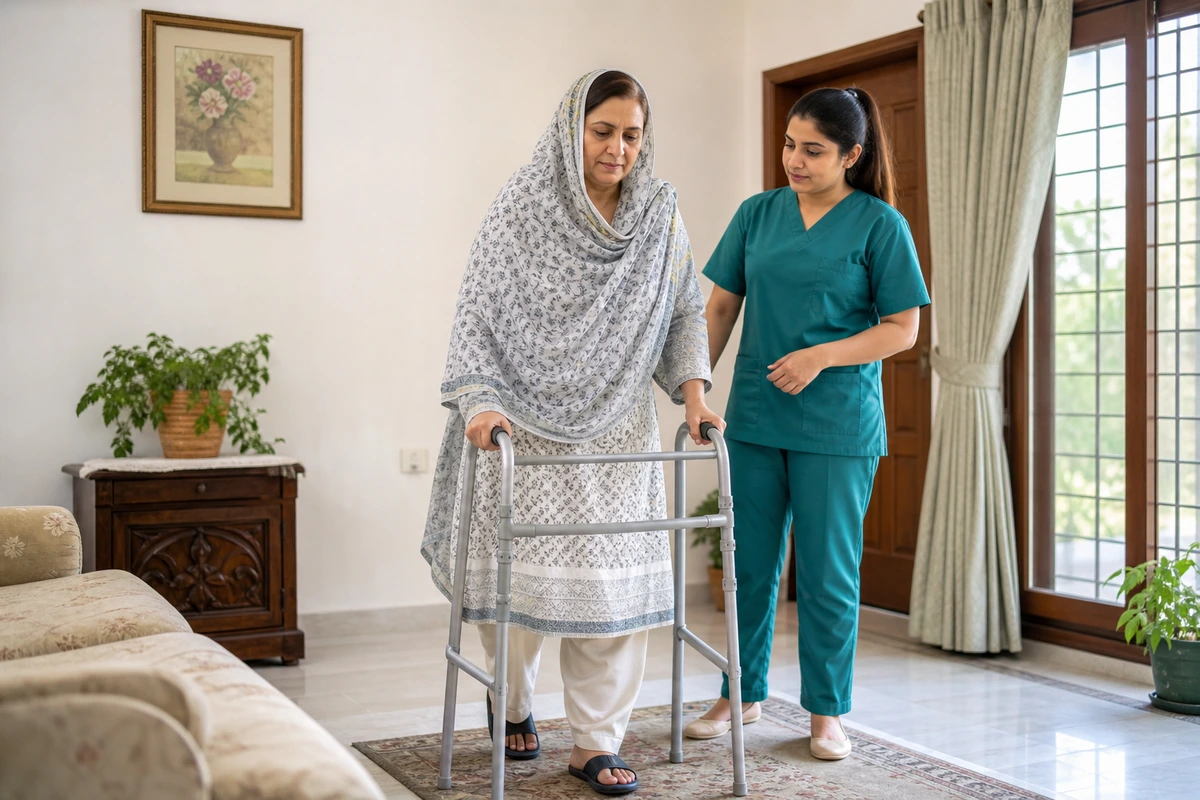
Using a Walker, Crutches or Cane Safely
Use the mobility aid selected by the physiotherapist. Wear secure, non-slip footwear and look ahead rather than down at the feet. Avoid pivoting on the operated leg; turn using small controlled steps. A caregiver should not pull the patient up by the arms or improvise a transfer technique.
Follow an Individual Exercise Programme
Rehabilitation helps restore movement, strength, balance and everyday function. Follow the repetitions, frequency and precautions prescribed for the individual patient. Generic exercise lists cannot account for wound status, weight-bearing limits, balance, other medical conditions or the exact operation.
Families considering supervised rehabilitation can learn about physiotherapy at home. ConsidraCare’s article on physiotherapy for knee pain provides broader background, but a post-surgical programme must come from the treating surgeon and physiotherapist.
Balance Movement With Recovery
Short, regular activity is often easier to tolerate than one long session. Mild temporary discomfort can occur, but severe pain, a marked loss of function or symptoms that continue to worsen should be discussed with the clinical team. Do not abandon a prescribed programme or intensify it without advice.
Nutrition, Hydration, Sleep and Bowel Comfort
Regular balanced meals support general recovery. Include a suitable protein source, vegetables, fruit and fibre while respecting any diabetes, kidney, heart or other medical diet. Drink enough fluid unless a clinician has prescribed a restriction.
Pain medicines and reduced activity can contribute to constipation or nausea. Tell the care team rather than starting a laxative or supplement without checking that it is suitable. Good sleep matters, but positioning should follow the surgical team’s advice. Avoid prolonged pressure under the knee unless specifically directed.
What a Family Caregiver Can Do?
- keep the written care plan and contact numbers accessible
- help record medicines without changing doses or timing
- prepare meals and permitted drinks
- keep pathways clear and mobility equipment within reach
- support safe transfers using the technique taught by a professional
- encourage prescribed exercises without forcing the joint
- observe changes in pain, swelling, wound appearance or alertness
- arrange transport and attend follow-up appointments when helpful
A family caregiver should not perform wound procedures, injections or rehabilitation techniques for which they have not been trained.
When Professional Support at Home May Help
Additional help may be useful when the patient lives alone, has difficulty with personal care or transfers, has several medical conditions, or when family members cannot provide consistent support. The right arrangement depends on the discharge plan: practical caregiving, nursing tasks and physiotherapy are different roles.
Families can review ConsidraCare’s information about post-operative care at home and discuss the patient’s actual needs with the treating team and the care provider. Home support should complement—not replace—orthopaedic follow-up and prescribed rehabilitation.

Recovery Timeline: What May Change Over the Coming Weeks
| Stage | Common focus | Important reminder |
|---|---|---|
| First few days | Pain control, safe transfers, short walks, wound observation and the prescribed exercise plan | Ask for help; do not guess weight-bearing limits |
| Weeks 1–2 | Building a daily routine and gradually improving confidence with basic activities | Keep follow-up and wound-care instructions |
| Weeks 3–6 | Progressing mobility and function under professional guidance | Do not stop a walking aid simply because another patient did |
| Following months | Strength, endurance and return to selected activities | Driving, work and higher-level activity require individual clearance |
This is a general framework, not a promise. The American Academy of Orthopaedic Surgeons also emphasises that returning to everyday activities takes time and that patients should follow their own precautions.
Warning Signs: When to Seek Medical Help
| Contact the surgical team promptly | Seek emergency care now |
|---|---|
| Increasing wound redness, warmth, swelling or drainage | Sudden shortness of breath or difficulty breathing |
| Fever or chills, using the threshold supplied by the treating team | Sudden chest pain, particularly with breathing or coughing |
| New or increasing calf pain, tenderness, redness or one-sided swelling | Collapse, fainting, severe confusion or another life-threatening change |
| Pain that is worsening or not controlled by the prescribed plan | Call local emergency services or go to the nearest emergency department |
| Unexpected loss of function, wound opening or bleeding that does not stop | Do not drive yourself if severely unwell |
When uncertain, contact the treating team. Warning signs can overlap, and a clinician must assess the cause.
Knee Replacement Aftercare Checklist
- Medicines taken exactly as prescribed
- Dressing and surrounding skin checked as directed
- Pain, swelling and new symptoms recorded
- Walking and exercises completed according to the rehabilitation plan
- Meals, permitted fluids and bowel comfort reviewed
- Walking routes kept clear and the mobility aid within reach
- Questions and follow-up dates recorded
- Emergency and surgical-team contact details available
Key Takeaway
Effective post-operative care for knee replacement is built on a clear discharge plan, safe movement, consistent rehabilitation, careful wound and medicine management, and early attention to concerning changes. Progress is individual. Focus on the patient’s own instructions and functional improvements rather than comparing recovery with someone else.
Frequently Asked Questions
How long does recovery take after knee replacement?
Recovery usually unfolds over weeks and months, but there is no single timetable. Procedure type, age, general health, complications, home support and rehabilitation progress all matter. Ask the surgeon what milestones are realistic for the individual patient.
How much walking should I do after knee replacement?
Use the frequency, distance, walking aid and weight-bearing limit given by the surgeon or physiotherapist. Short regular walks may be recommended, but increasing activity too quickly can worsen symptoms.
What swelling is normal after knee replacement?
Swelling is common during recovery and may fluctuate with activity. New, severe or rapidly increasing swelling—particularly with calf pain, redness, warmth, chest pain or breathlessness—requires prompt medical assessment.
How should I sleep after knee replacement?
Follow the positioning advice from the surgical team. Use support exactly as demonstrated and avoid keeping the knee bent over a pillow for long periods unless the clinician has specifically directed it.
When can I climb stairs or drive?
These decisions depend on strength, balance, reaction time, the operated leg, medicines and the clinician’s assessment. Learn a safe stair technique from the physiotherapist and obtain clearance before driving.
Does every patient need physiotherapy?
Rehabilitation is an important part of knee-replacement recovery, but the setting, frequency and exercises vary. Follow the plan prescribed for the individual operation and health status.
When should a family consider professional home support?
Consider discussing support when the patient lives alone, needs help with transfers or personal care, has complex medical needs, or lacks reliable assistance. Match the provider’s role—caregiving, nursing or physiotherapy—to the discharge plan.

